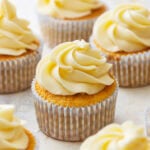
Gluten-Free Vanilla Cupcakes
An easy recipe for gluten-free vanilla cupcakes that are soft and fluffy. Bakery-style gluten-free cupcakes topped with a vanilla buttercream frosting. The recipe also has a dairy-free option.
Servings: 12 servings
Ingredients
Vanilla Cupcakes
- 6 tbsp unsalted butter, softened dairy-free use Smart Balance butter
- ¾ cup granulated sugar
- 2 large eggs
- 1 tbsp pure vanilla extract
- 1¼ cups gluten-free all-purpose rice flour blend with xanthan gum I like Pillsbury gluten-free. Not all gluten-free flours are created equal. You may experience different baking results depending on the gluten-free flour blend you choose.
- 1¾ tsp gluten-free baking powder
- ¼ tsp salt
- 1 cup milk dairy-free use unsweetened almond milk, cashew or coconut milk
Vanilla Buttercream
- ¾ cup unsalted butter, softened dairy-free use Smart Balance Butter
- 1 tbsp pure vanilla extract
- ¼ tsp salt
- 4 cups confectioners’ sugar
- 3 tbsp milk dairy-free use unsweetened almond milk, cashew or coconut milk
Instructions
Vanilla Cupcakes
- Preheat oven to 350°F and line a muffin pan with liners or spray with gluten-free nonstick cooking spray.
- In a large bowl cream the butter until smooth. Add the sugar and beat until smooth.
- Add eggs and vanilla extract and mix until fully combined and smooth.
- Add gluten-free flour, baking powder, and salt and mix until combined.
- Pour in milk and mix for 2 minutes on medium until batter is smooth.
- Scoop the cake batter into the lined muffin pan. I always use a greased ice cream scoop when making cupcakes and muffins. It measures out the perfect amount and is less messy than trying to spoon batter into the pan.
- Bake cupcakes for 25 minutes. Please watch your oven because all ovens are different. I like to check my cupcakes with a toothpick to make sure they are done too.
- Allow cupcakes to completely cool before frosting. I like to use a baking cooling rack.
Vanilla Buttercream
- In a large bowl, cream butter until smooth.
- Add the pure vanilla extract and mix until fully combined.
- Add the confectioners’ sugar 1 cup at a time and mix until fully combined.
- Add the milk and beat until smooth and spreadable.
- I like to line a piping bag in a tall glass and then add the frosting. It makes it easier and less mess to fill. My favorite frosting tip is the Wilton 1M.
Video
Notes
- I have found that the best way to measure gluten-free flour is to use the “spoon & level” method. Use a spoon to scoop the flour out of the bag into a measuring cup. After spooning the flour into a measuring cup, use the back of a knife to level the flour off the measuring cup.
-
- Use equal weight as written in the recipe
- Add 1–2 tablespoons additional milk
- Start checking for doneness 2–3 minutes early
-
- Use equal weight as written in the recipe
- Add 1 tablespoon additional milk if the batter feels thick
- Bake fully, then cool completely in the pan
-
- Use equal weight as written in the recipe
- Do not add extra liquid
- Fill liners slightly less full (just under 2/3)
Nutrition
Serving: 1cupcake | Calories: 433kcal | Carbohydrates: 63g | Protein: 3g | Fat: 19g | Saturated Fat: 12g | Cholesterol: 83mg | Sodium: 125mg | Potassium: 107mg | Fiber: 1g | Sugar: 54g | Vitamin A: 620IU | Calcium: 71mg | Iron: 1mg