Gluten-Free French Macarons

Published

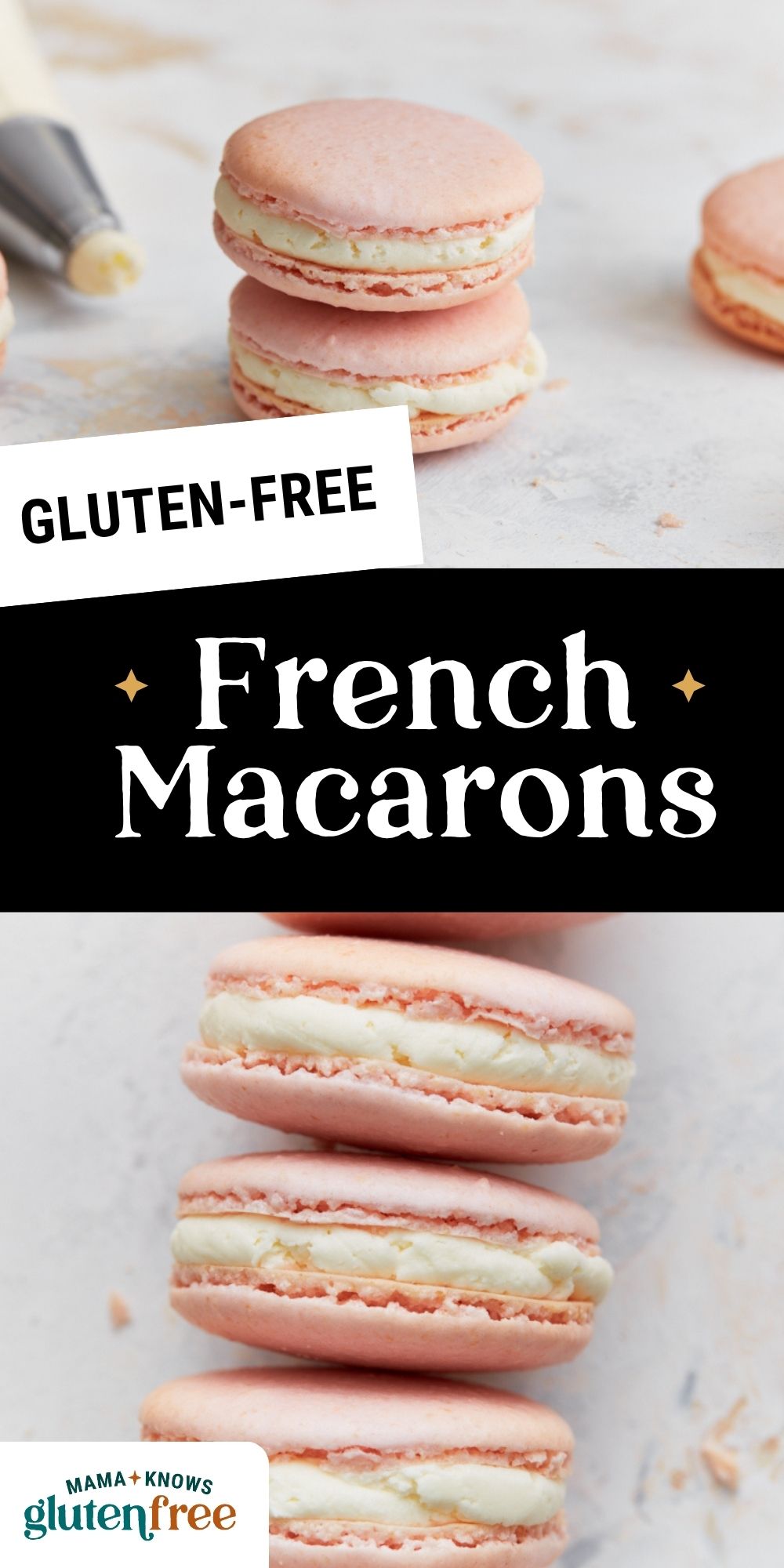
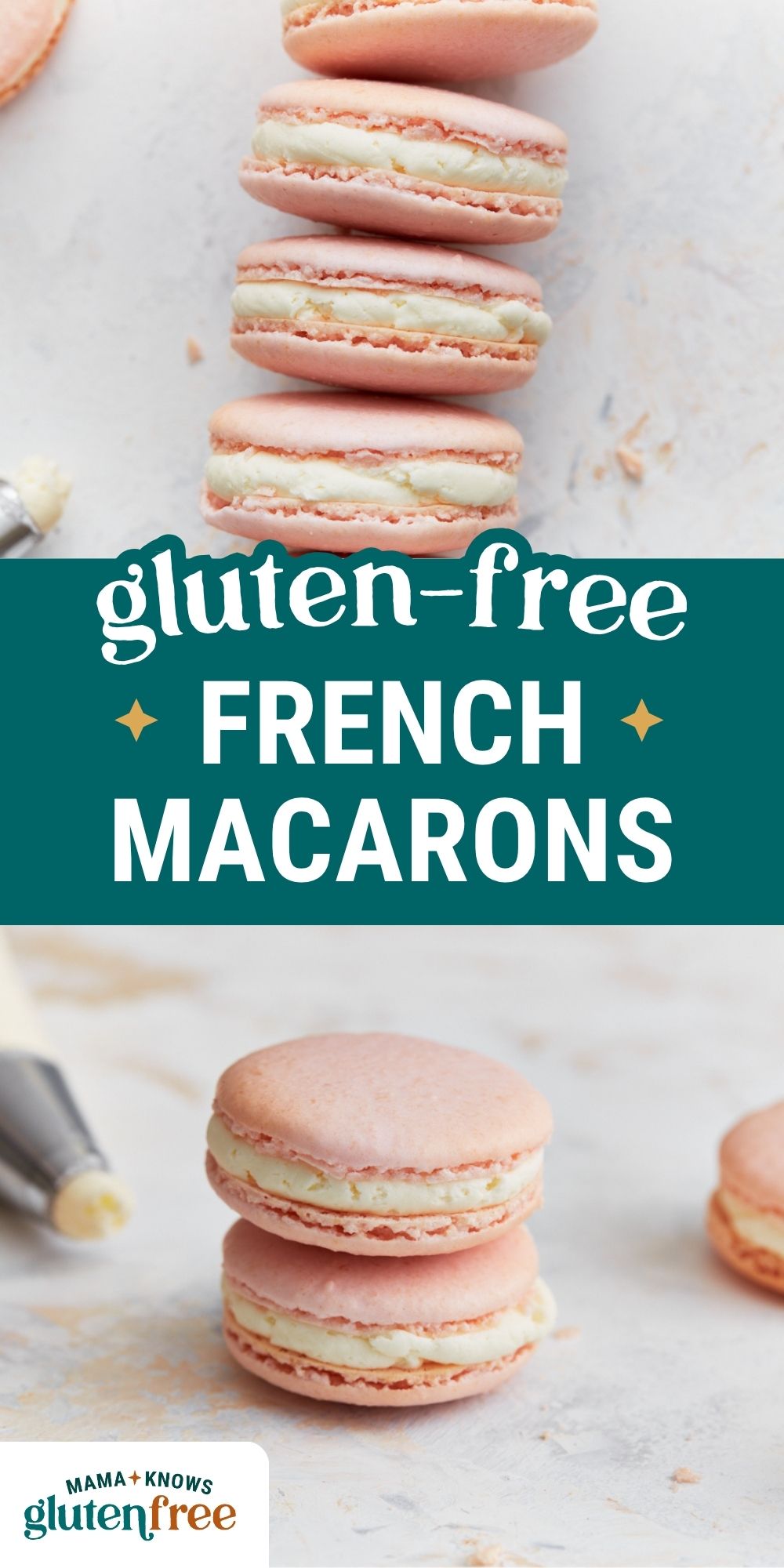
Enjoy these French classics at home with this Gluten-Free French Macarons recipe. Macarons are typically made with almond flour, making them perfect for anyone who needs or prefers gluten-free desserts. Each cookie has a delicate, crisp shell with a chewy center and is filled with a smooth buttercream frosting. Made with simple, easy-to-find ingredients like almond flour, egg whites, sugar, and cream of tartar, it’s surprisingly doable to create these chic bakery-style treats right in your own kitchen.
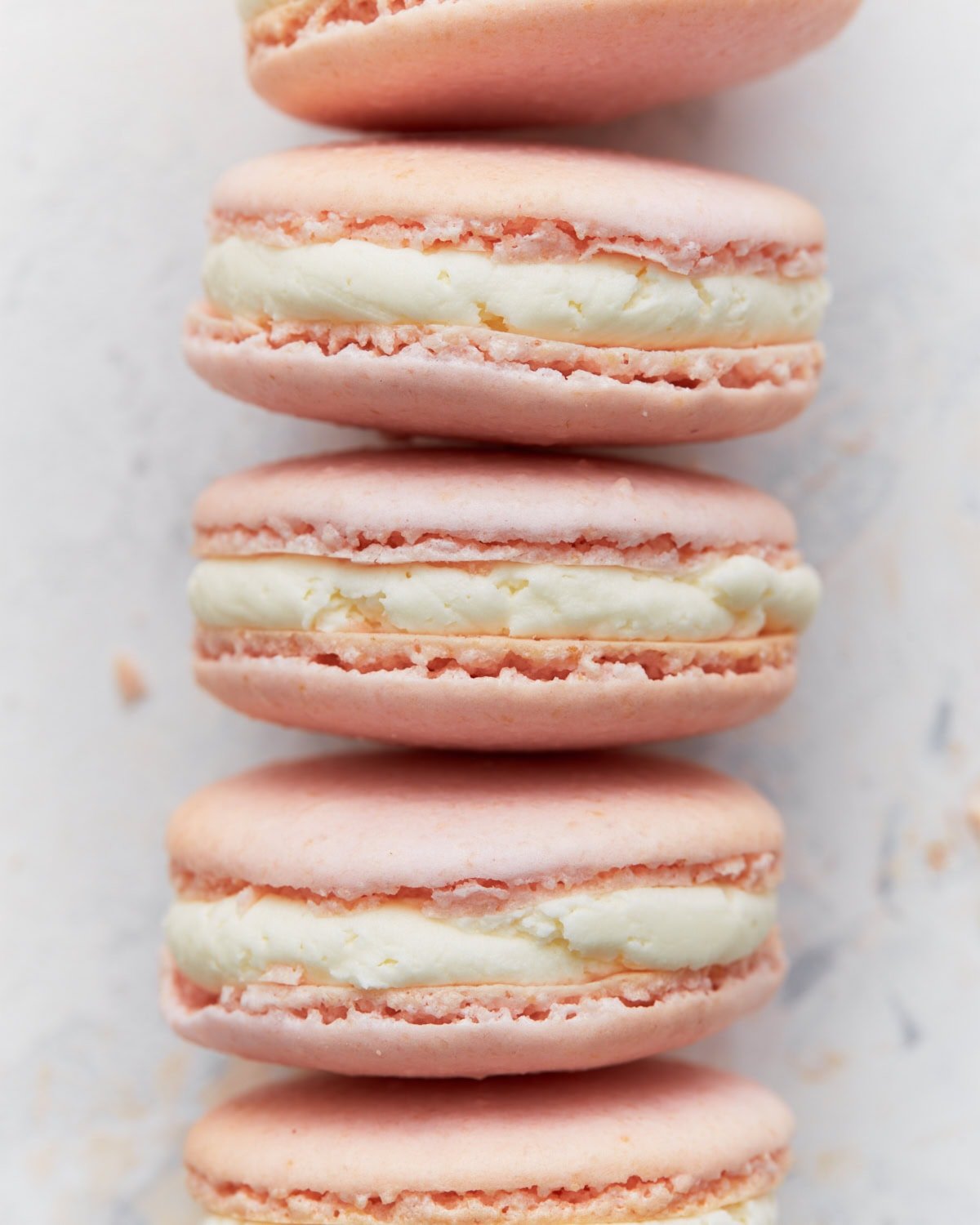
Macarons are always such a fun treat to make, and I wanted this recipe to feel approachable no matter your skill level. I spent time testing the macaronage technique, which is the gentle folding of almond flour and powdered sugar into a stiff meringue, so you know exactly what the batter should look and feel like. With just a few simple ingredients like egg whites, almond flour, powdered sugar, and vanilla, you will get shells that bake up crisp on the outside with that perfect chewy center. I love making a batch when I want something elegant but not complicated. If you try these, tell me what filling you choose in the comments.
Gluten-Free Baking Tips
- Weigh the ingredients. I recommend using a kitchen scale to weigh out the almond flour, powdered sugar, egg whites, and granulated sugar for the most accurate results.
- Sift the dry ingredients twice. Double-sifting the almond flour and powdered sugar removes every tiny lump and creates ultra-smooth shells. It also helps prevent hollows by keeping the batter evenly aerated.
- Whip the meringue fully. Beat the egg whites until they’re stiff, glossy peaks that stand straight up. Under-whipped meringue collapses in the oven, which leads to cracked tops and flat shells.
- Master the macaronage. Fold slowly and deliberately until the batter flows in thick, shiny ribbons. When you can draw a clean figure-eight without the stream breaking, you’re at the perfect consistency for full, even feet (the ruffled, bubbly-looking edge that forms at the base of each shell).
- Let the shells dry completely. Rest the piped circles until the tops feel dry and matte. If they’re even slightly tacky, they will trap steam and crack instead of rising with smooth, domed tops.
- Check your oven temperature. Macarons are sensitive to heat, so even a 10–15 degree difference can cause browning, cracked shells, or no feet. An oven thermometer gives you accurate, consistent results every time.
Gluten-Free French Macarons
Equipment
- 1 hand or stand mixer
- 1-2 baking sheets
Ingredients
Macaron Shells
- 4.59 oz. powdered sugar, 130g
- 4.59 oz. blanched almond flour, 130g, finely ground*
- 3.53 oz. egg whites, 100g, room temperature (about 3 large eggs)
- ¼ tsp cream of tartar
- 3.17 oz. granulated sugar, 90g
- ½ tsp vanilla extract
- 1-2 drops gel food coloring, optional
Filling (Basic Buttercream)
- ½ cup unsalted butter, softened
- 2 cups powdered sugar
- 1 tsp pure vanilla extract
- 1-2 tbsp heavy cream
Instructions
- Line two baking sheets with parchment paper or silicone mats. Set aside.
- Sift powdered sugar and almond flour together into a bowl or onto a large plate. Discard any coarse bits.
- In a large bowl of a stand mixer, beat egg whites on medium speed until foamy. Add cream of tartar and mix to combine. Gradually add granulated sugar and beat until stiff, glossy peaks form, about 4-5 minutes.
- Add vanilla extract and gel food coloring if using and beat just to combine.
- Gently fold in the sifted almond mixture in thirds, using a spatula. Mix until the batter flows in thick ribbons and forms a figure-eight without breaking.
- Transfer batter to a piping bag fitted with a round tip. Pipe 1-inch circles onto the prepared baking sheets, spacing them 1 inch apart. Tap the baking sheets firmly on the counter to release air bubbles. You can pop small air bubbles that are forming on the surface with a toothpick. Let macarons rest at room temperature for about 1 hour or until the tops are dry to the touch.
- Preheat oven to 300°F. Bake one tray at a time for 14-16 minutes. Shells should rise with feet and not crack. Cool completely before removing from the parchment paper.
- For the filling, beat butter until creamy. Add powdered sugar gradually, then vanilla and cream. Beat until fluffy.
- Pipe a small amount of filling onto the flat side of one shell and sandwich with another.
- For the best texture, refrigerate assembled macarons for 24 hours, then bring to room temperature before serving.
Notes
Nutrition
Nutrition information is automatically calculated, so should only be used as an approximation.
How to Make Gluten-Free French Macarons Step by Step

Gather the ingredients: Gather all the ingredients together. Line two baking sheets with parchment paper or silicone mats and set aside.
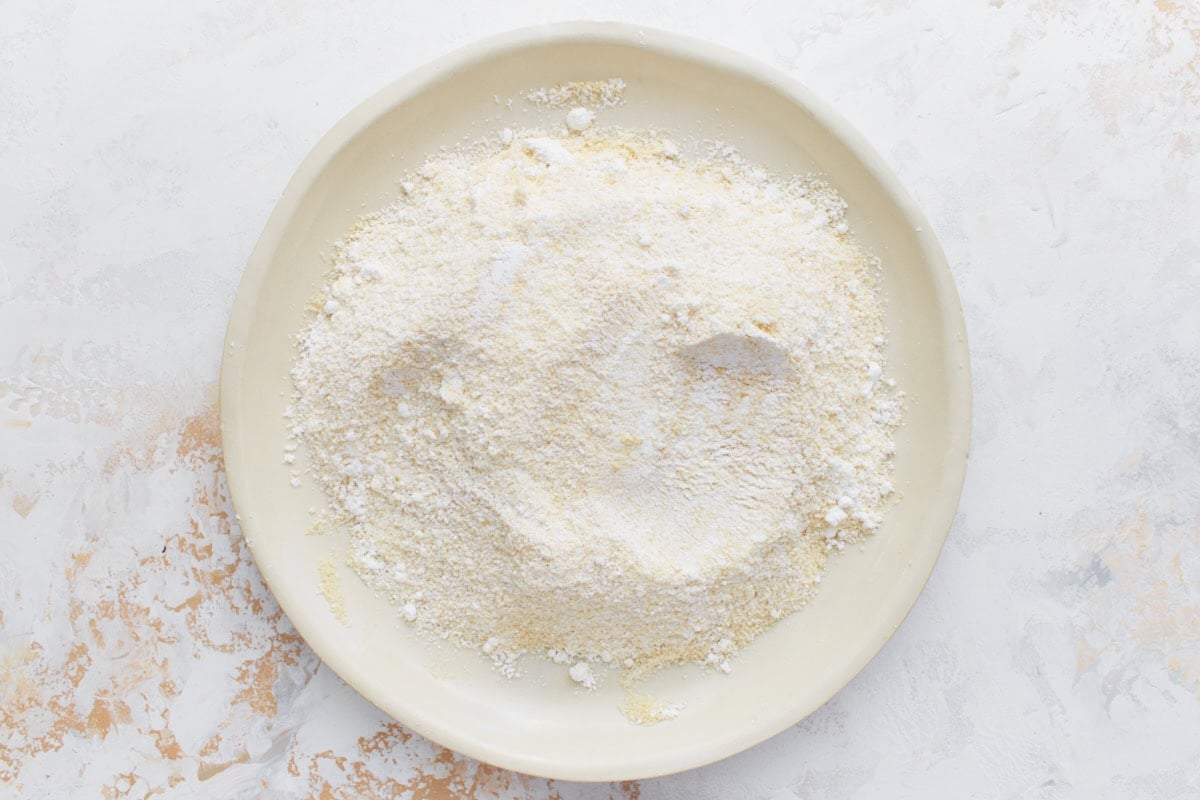
Sift dry ingredients: Sift together 4.59 oz (130g) powdered sugar and 4.59 oz (130g) blanched almond flour into a bowl or onto a large plate. Discard any coarse bits for smooth shells.
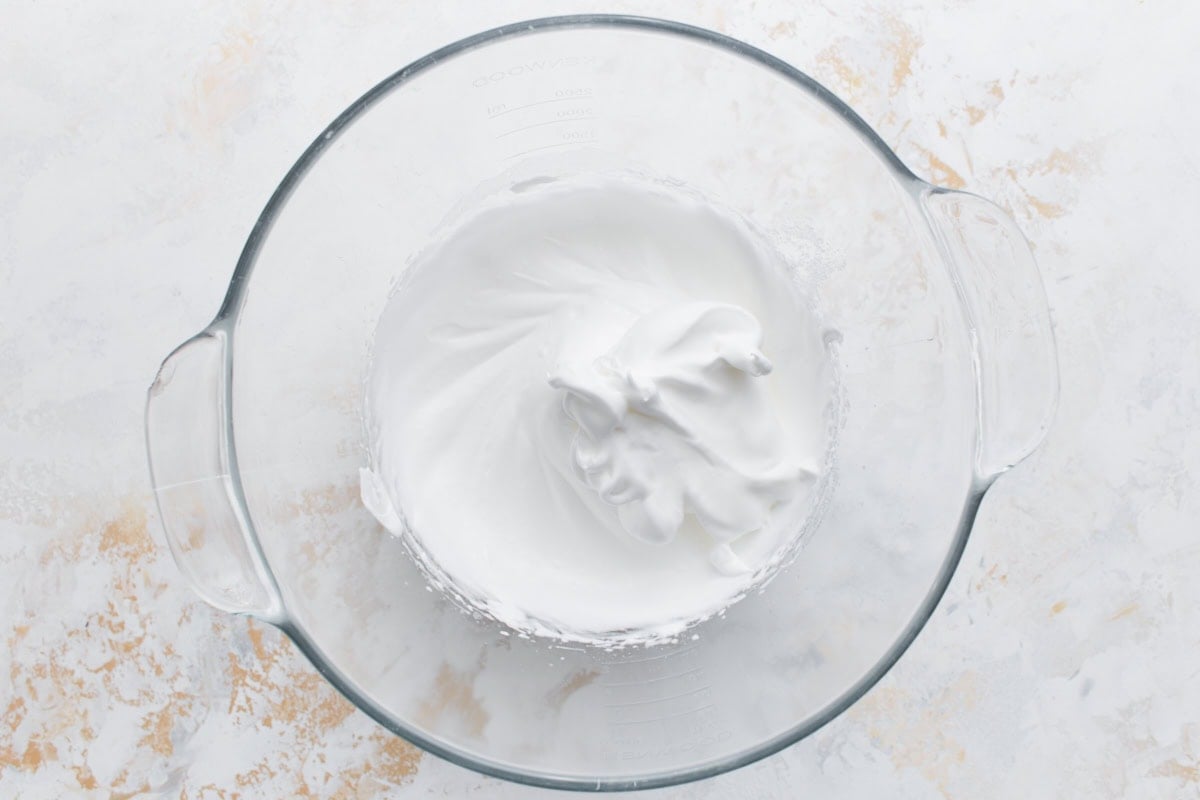
Whip the egg whites: In the bowl of a stand mixer, beat 3.53 oz. (100g) egg whites (about 3 large eggs) on medium speed until foamy, then add ¼ tsp cream of tartar. Continue mixing and gradually stream in 3.17 oz (90g) granulated sugar, beating until stiff, glossy peaks form, about 4–5 minutes.
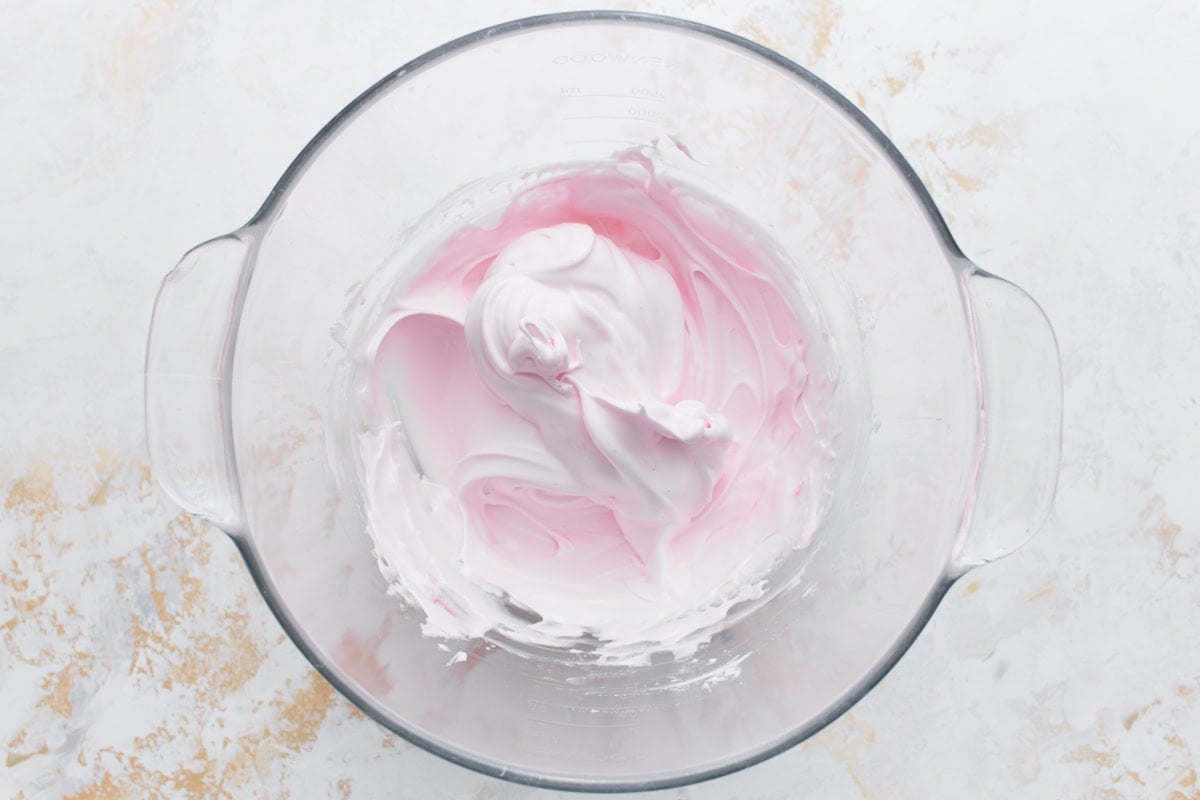
Add flavor + color: Mix in ½ tsp vanilla extract and 1–2 drops gel food coloring, if using, just until combined.
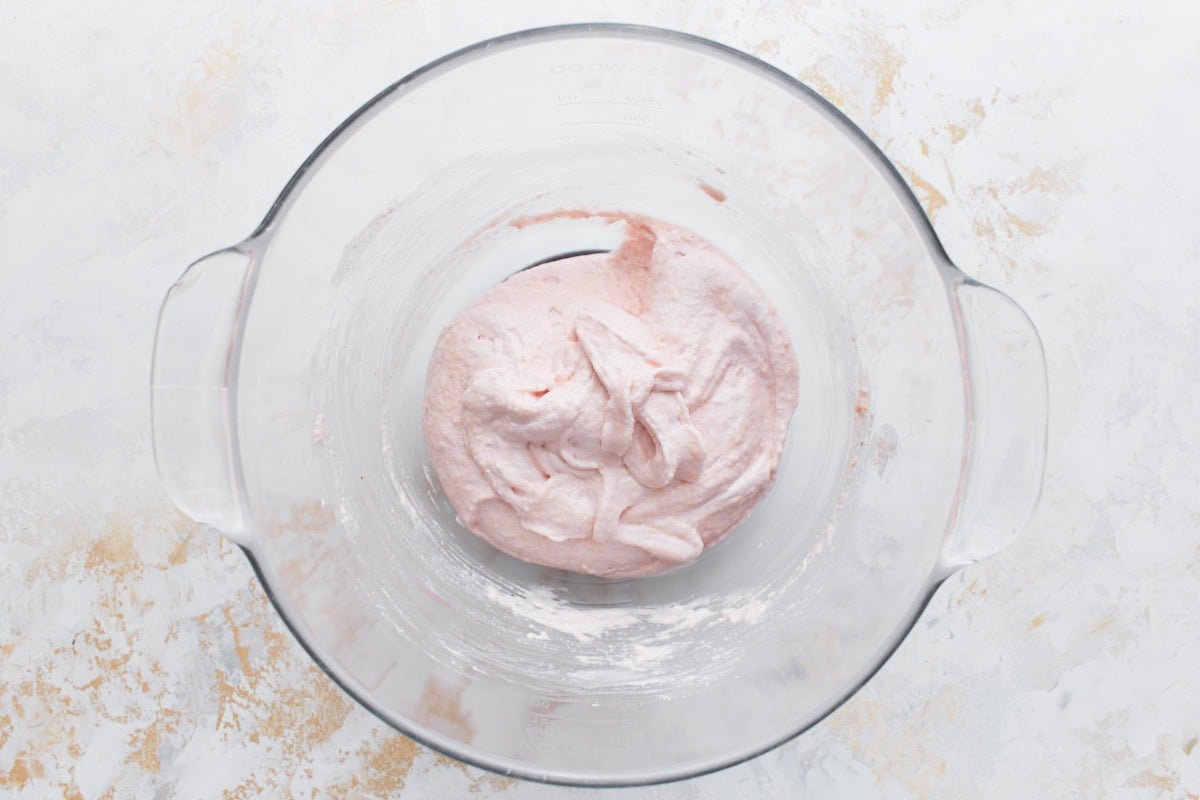
Macaronage (fold the batter): Gently fold the sifted almond flour mixture into the meringue in three additions. Continue folding until the batter flows in smooth, thick ribbons and can form a figure-eight without breaking.
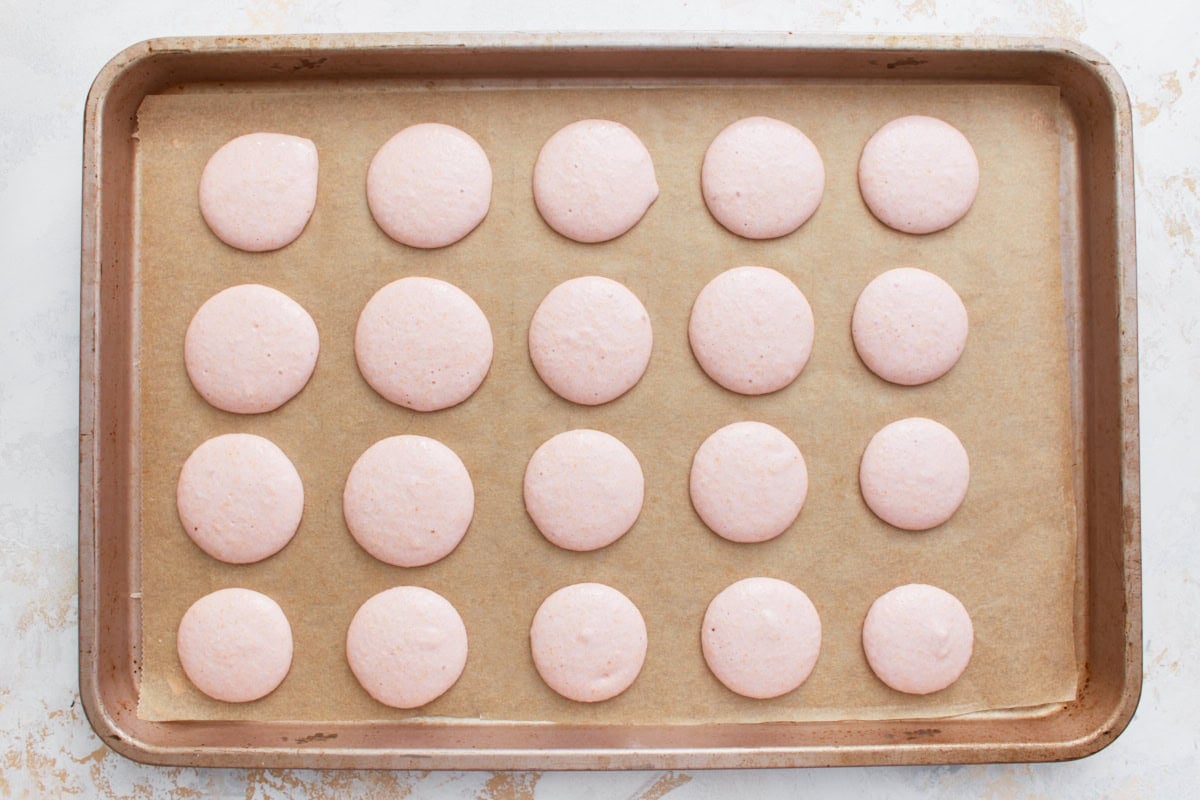
Pipe the shells: Transfer the batter to a piping bag fitted with a round tip. Pipe 1-inch circles onto the prepared baking sheets, spacing them about 1 inch apart. Tap the trays firmly on the counter to release air bubbles, and pop any on the surface with a toothpick.
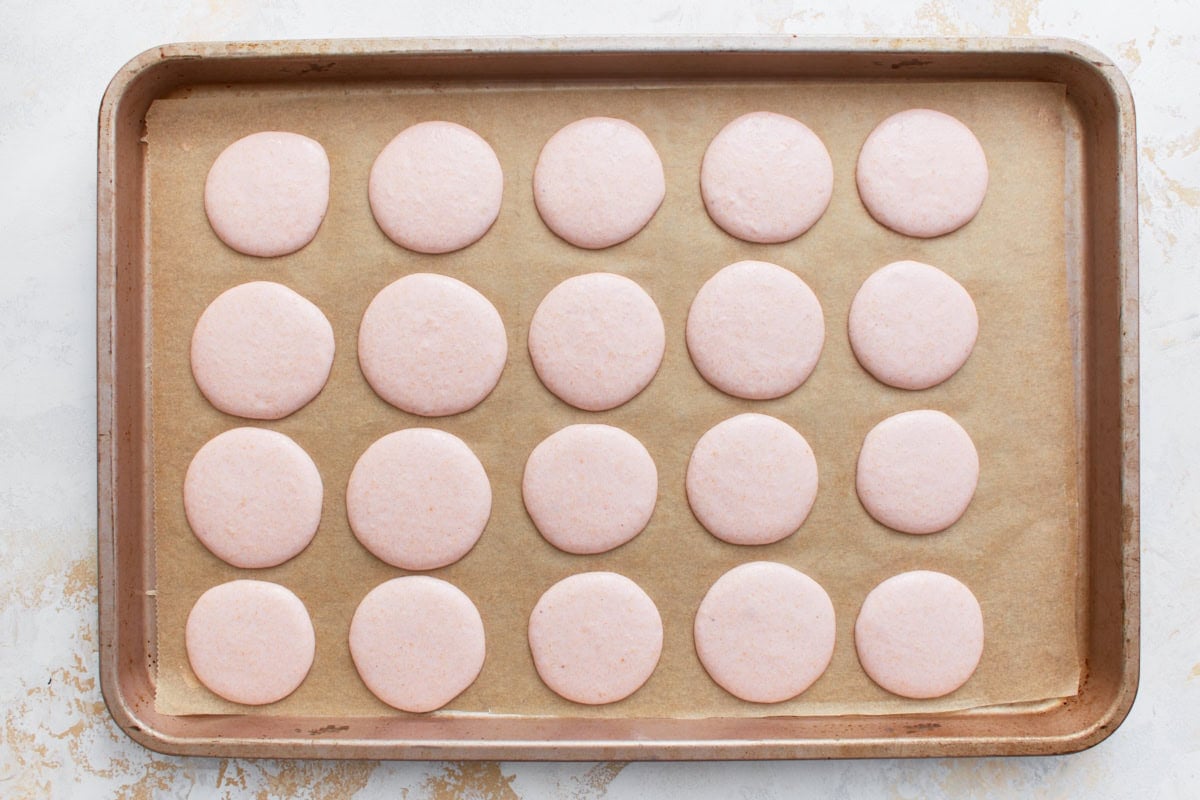
Rest the shells: Let the piped shells rest uncovered for about 1 hour, or until the tops feel dry and matte to the touch.
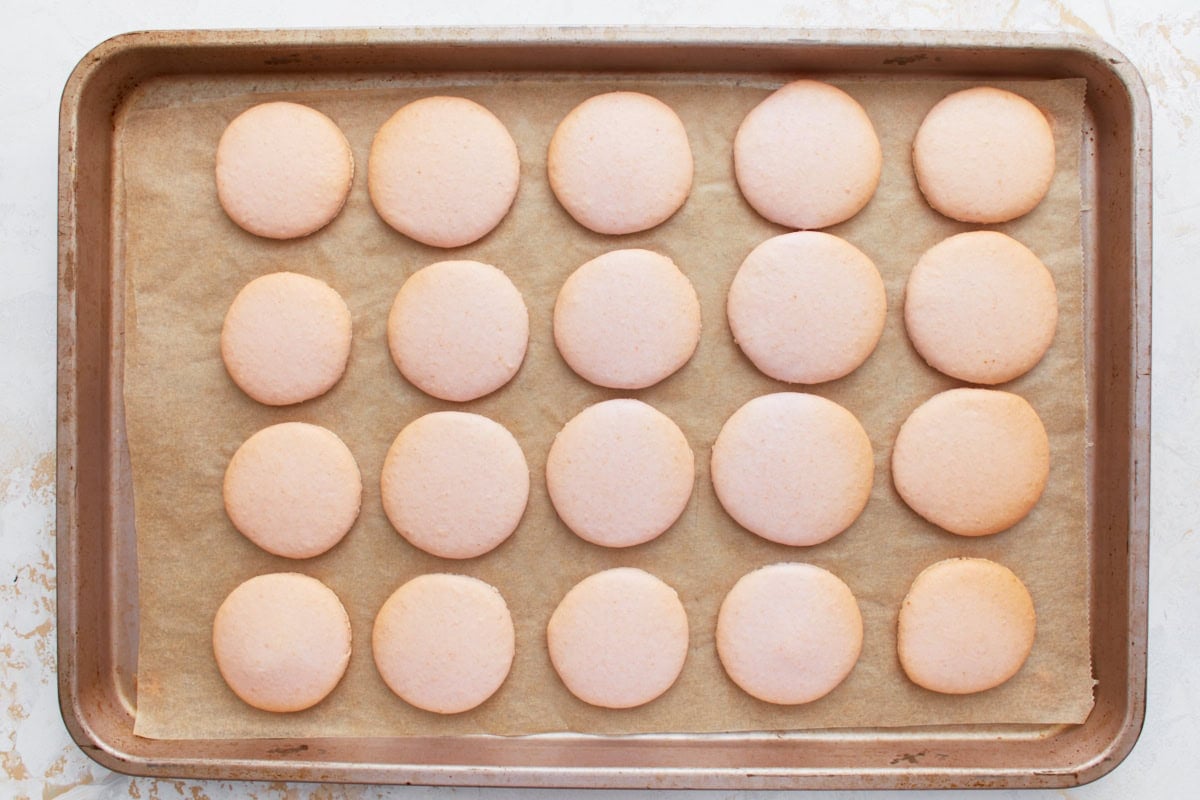
Bake the shells: Preheat the oven to 300°F and bake one tray at a time for 14–16 minutes, or until the shells have risen with feet and no longer wobble when touched. Allow them to cool completely before removing from the parchment and filling.
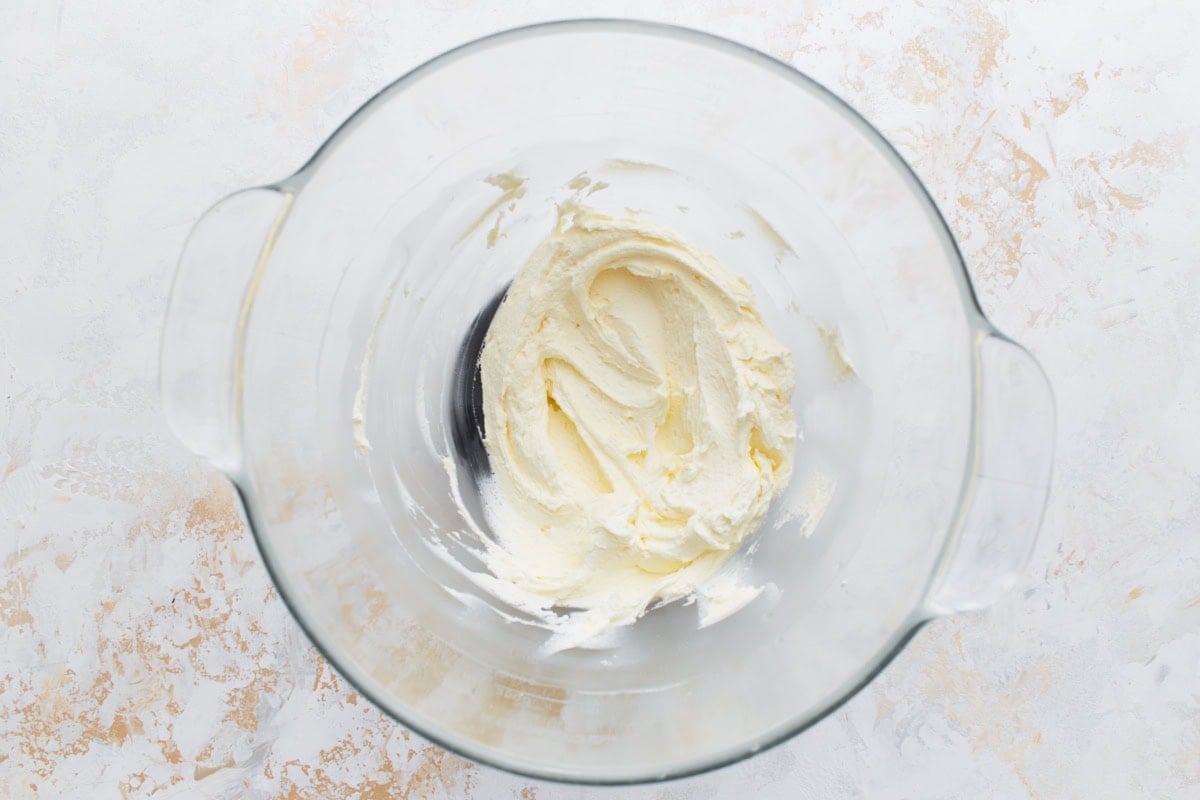
Make the filling: In a bowl, beat ½ cup softened unsalted butter until creamy. Gradually add 2 cups powdered sugar, then mix in 1 tsp vanilla extract and 1–2 tbsp heavy cream. Beat until smooth, fluffy, and pipeable.
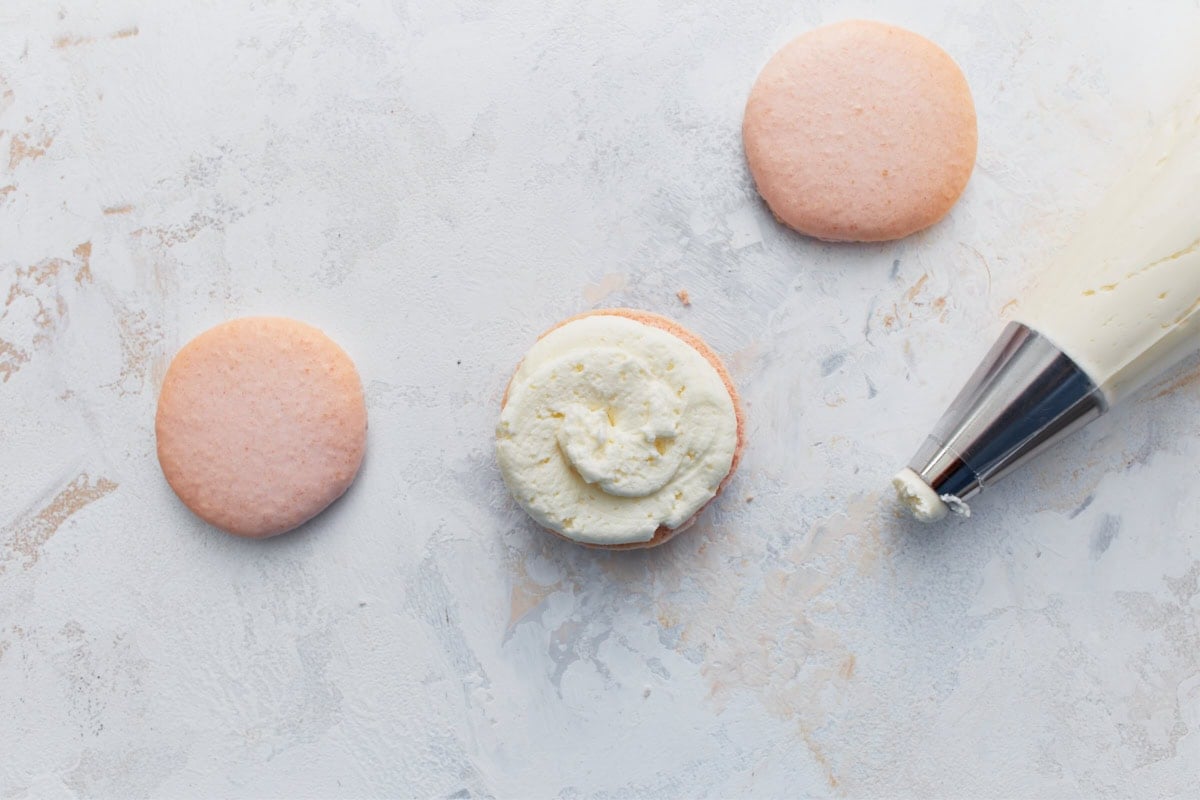
Assemble the macarons: Be sure the shells are cooled completely before assembling. Pipe a small amount of buttercream onto the flat side of one shell and gently press another shell on top to form a sandwich.
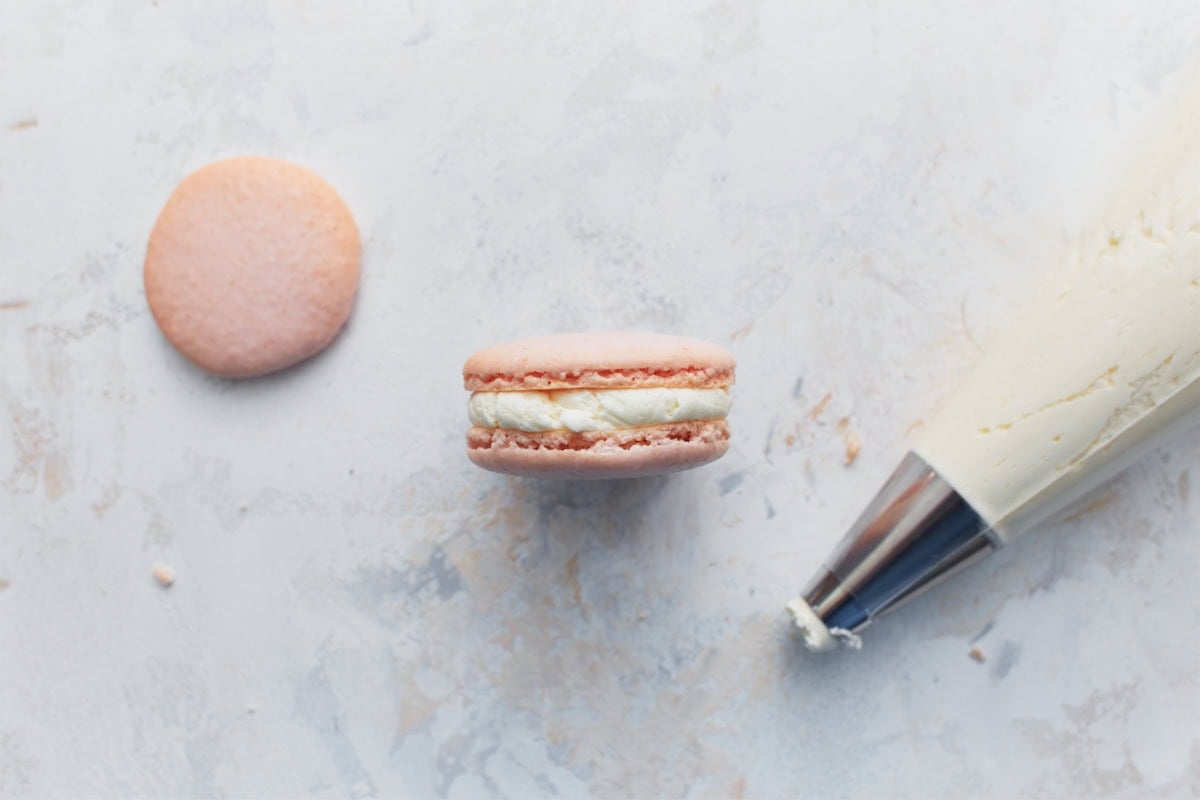
Rest and serve: For the best texture, refrigerate assembled macarons for 24 hours, then let them come to room temperature before serving. Enjoy!
Recipe Variations
- Use a different extract: Swap vanilla with almond, lemon, coffee, or raspberry extract. Make these seasonal by using peppermint at Christmas or lemon for spring.
- Change the filling: Use different fillings (ganache, curd, jam, cream cheese buttercream)
- Switch up the color: Use different colors gel food coloring to make different colors. You can even use multiple colors and flavors for party platters.
- Add garnishes: After piping add sprinkles, edible glitter, or cocoa dust.
Common Troubleshooting Issues
- Cracked shells: This usually means the shells did not rest long enough to form a dry skin, or the oven temperature was too high. Make sure they feel dry and matte before baking, and use an oven thermometer for accuracy.
- No feet: Flat macarons often come from overmixed batter or under-whipped meringue. The meringue should have stiff, glossy peaks, and the batter should flow slowly, not run. A little under-mixing is easier to correct than over-mixing.
- Hollow shells: When the meringue is not whipped enough, or when the batter is overfolded, air pockets form and collapse after baking. Whip until firm peaks stand tall, and fold gently, stopping as soon as the batter flows in thick ribbons.
- Wrinkled tops: A low oven temperature or shells that rested too long can cause dull, wrinkled surfaces. Check that your oven is fully preheated and avoid leaving piped shells out past the point where they feel dry to the touch.
- Batter too thick: If the batter is still stiff and does not flow easily, it is under-mixed. Fold a few more turns, testing frequently so you do not overdo it. The right texture falls from your spatula like slow, glossy lava.
- Batter too runny: This means it has been over-mixed and the structure of the meringue has broken down. Unfortunately, there is no repair at this stage. Next time, stop folding the moment you reach a smooth ribbon that can form a figure-eight.
- Food coloring thins the batter: Liquid dye adds moisture and weakens the batter, making runny shells more likely. Choose gel food coloring instead so you get vivid color without throwing off the texture.
Serving Suggestions
Serve these French macarons on their own as an elegant dessert, or pair them with a hot cup of coffee or tea for a cozy treat. For a more complete dessert spread, arrange them next to gluten-free lemon bars or gluten-free mini cheesecakes for the perfect holiday spread. I love adding them to a cookie tray with other delicate cookies like gluten-free shortbread cookies and gluten-free vanilla wafers.
Storage Instructions
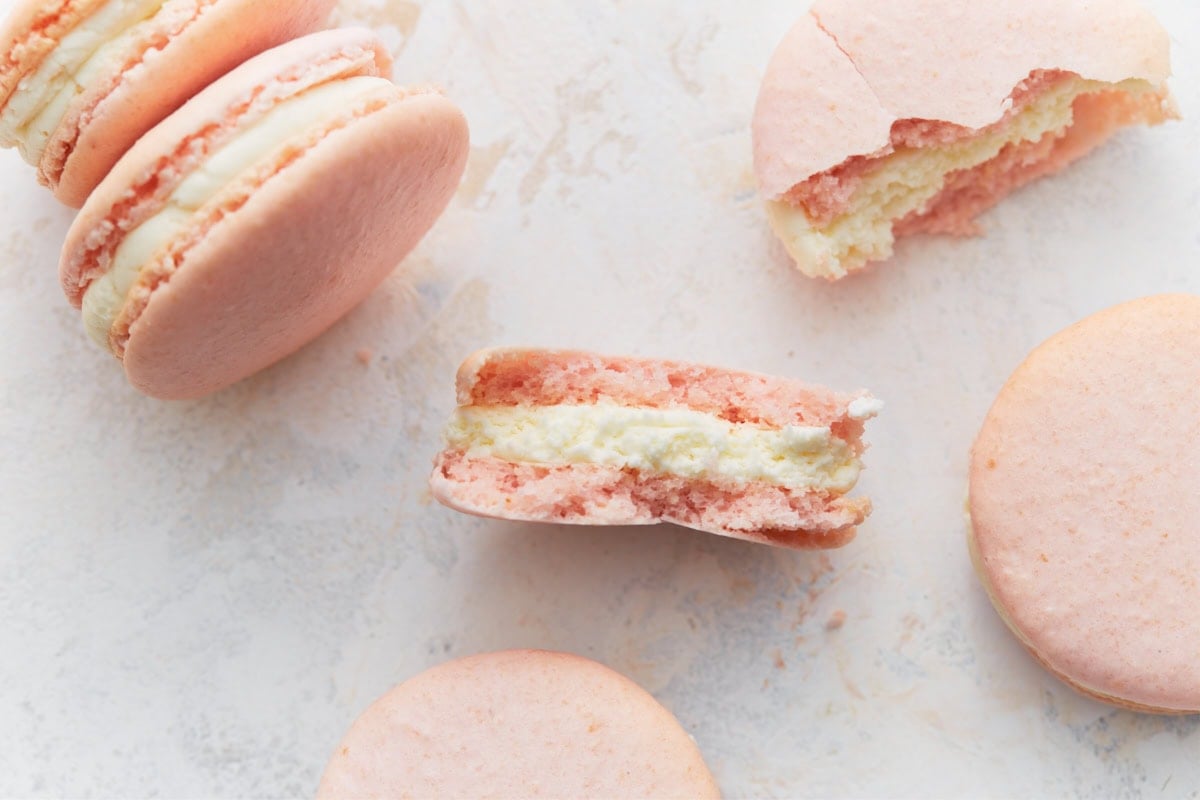
Store filled macarons in an airtight container in the refrigerator for up to 5 days. The texture actually improves after resting for 24 hours. It allows the shells to soften slightly and meld with the filling.
For longer storage, freeze macarons in a single layer until firm, then transfer them to a sealed container and freeze for up to 1 month. Thaw in the refrigerator overnight or set at room temperature for about 20 minutes before serving. Unfilled shells can also be frozen or refrigerated separately, which makes them easy to prep ahead for holidays, parties, or gift boxes.