Easy Gluten-Free Bread

Updated
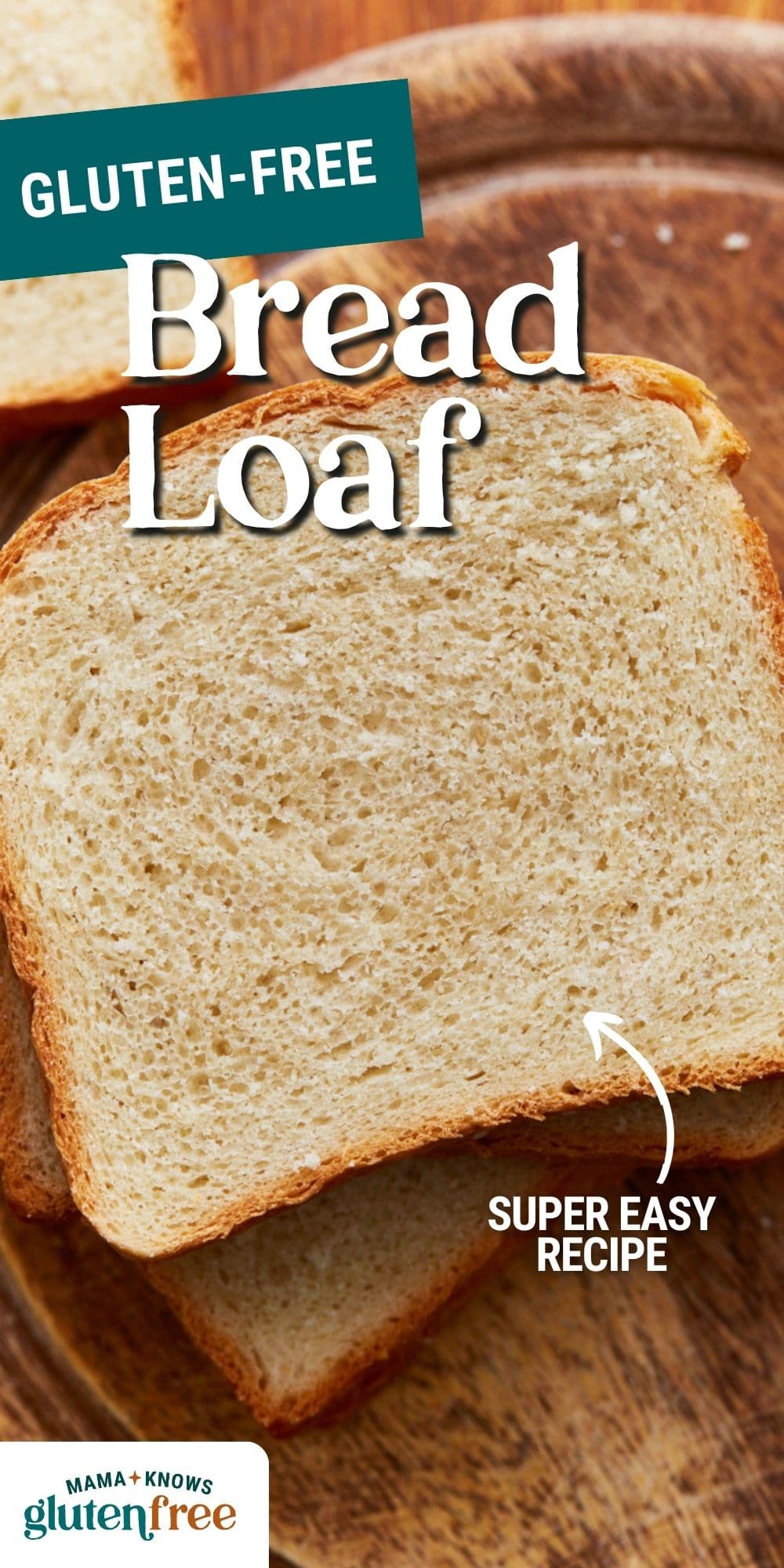
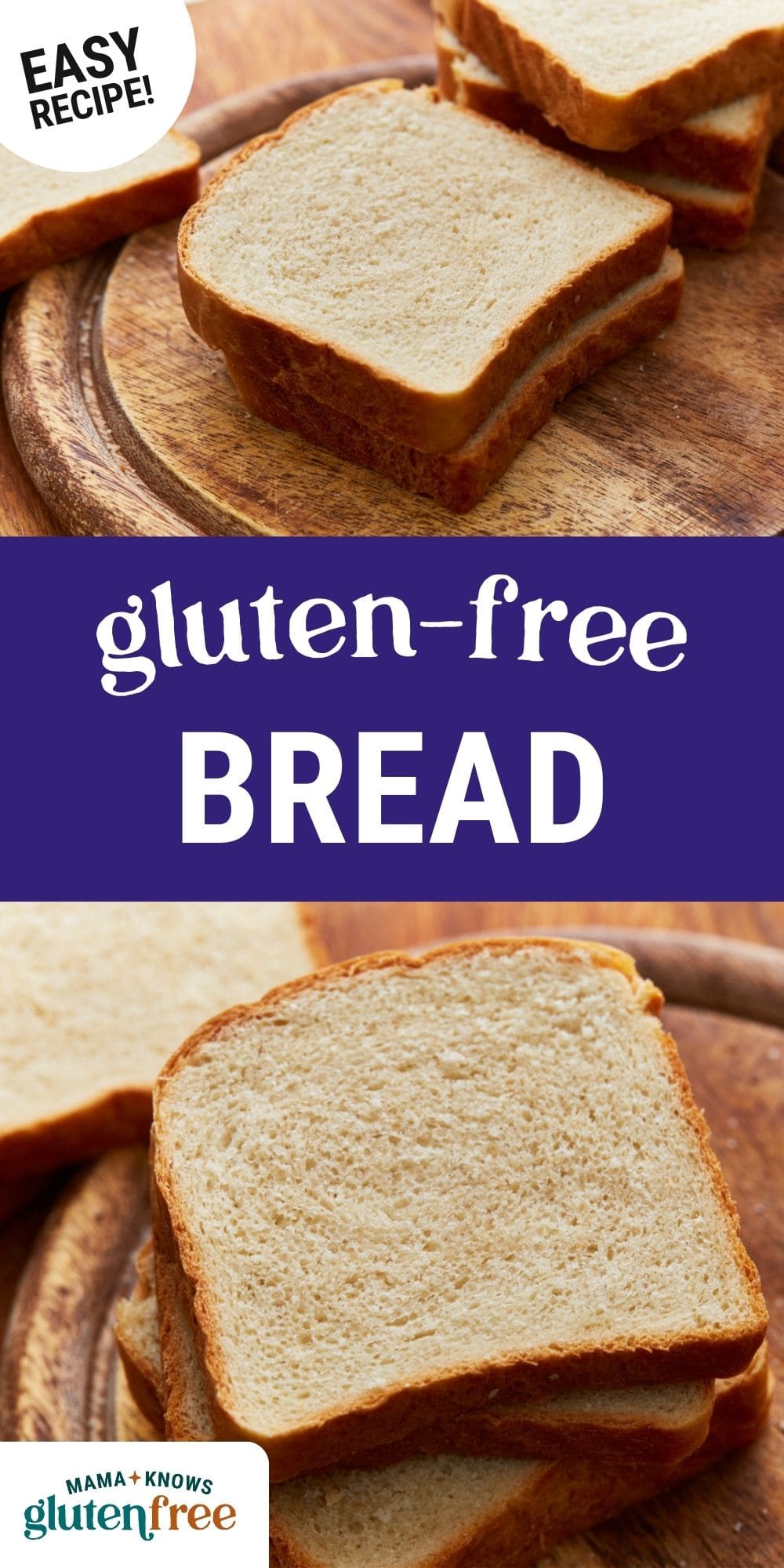
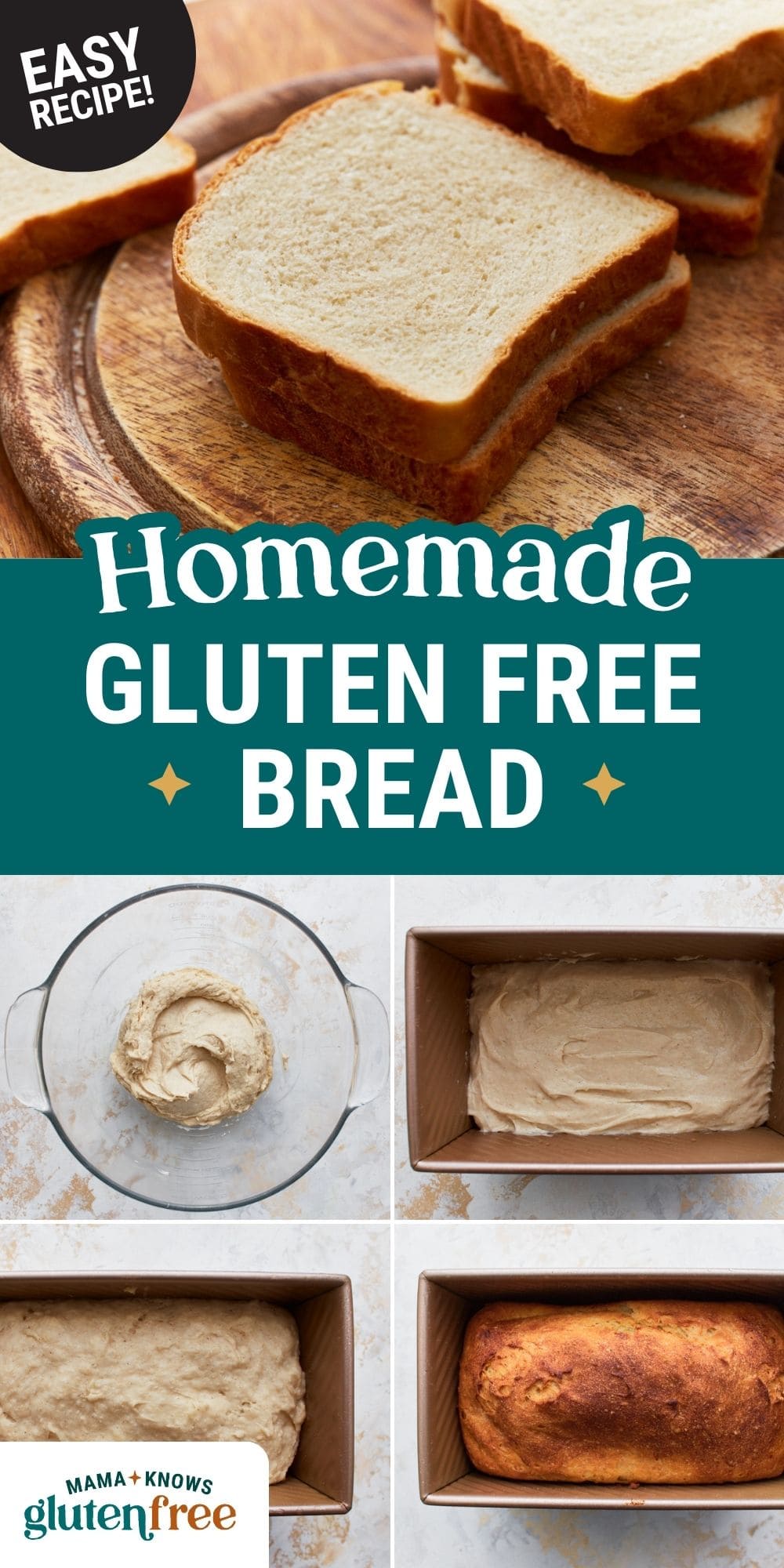
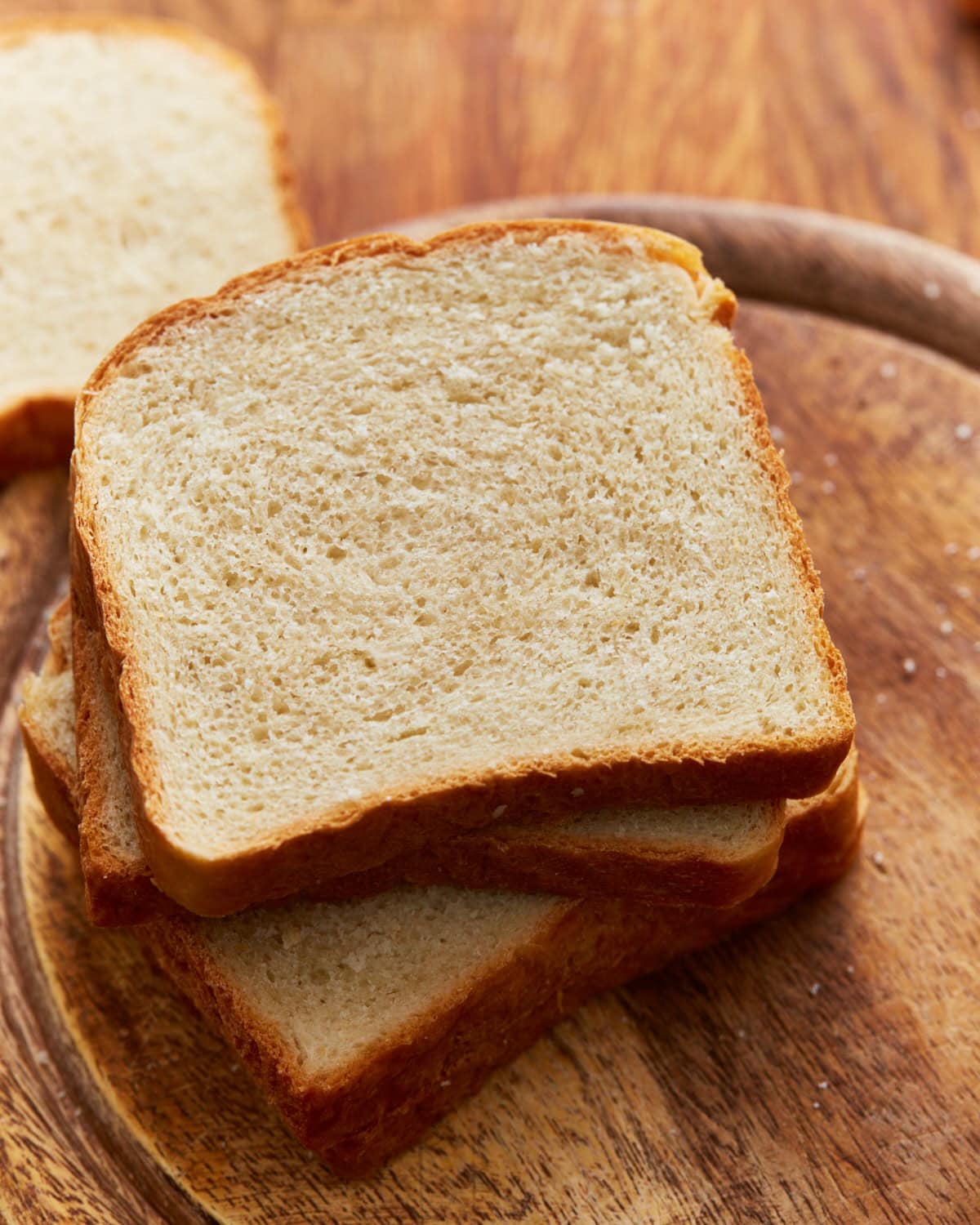
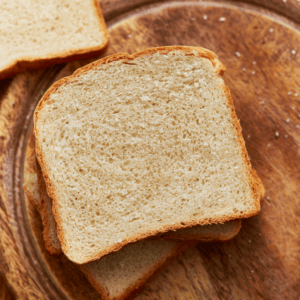
The easiest gluten-free bread recipe is baked right at home in your oven. This soft, fluffy white sandwich bread is made with amazing dexterity. I make it every week and slice it up for all my kids’ sandwiches.
Gluten-Free Bread Recipe
For years, readers have been asking me how to bake my Bread Machine Recipe in the oven. I have always baked my bread in an Oster bread machine with a gluten-free setting, but I wanted a recipe that could be made right in the oven.
This oven-baked gluten-free homemade bread is also completely dairy-free, a dietary must in my house. Instead of using milk, I used a mixture of olive oil and warm water to activate the yeast and add moisture to the bread. This recipe makes excellent gluten-free sandwich bread! This yeast bread is so soft, has an amazing texture, bends and squishes, and is easy to slice.
Gluten-Free Baking Tips
- Bread rises best in a warm location. My oven has a bread proofing mode. When the oven is set in bread proofing mode, it is 100°F.
- Best baked in a 9″x 4″ small Pullman loaf pan. If you use a 9″x 5″ bread pan, the bread will not rise as tall. I tried it with both a 9″x 5″ bread pan and a 9-inch x 4-inch Small Pullman loaf pan. I HIGHLY recommend using the small Pullman loaf pan.
- The best way to measure gluten-free flour is the “spoon & level” method. Using a spoon, scoop the flour into the measuring cup. After you’ve spooned the flour into the measuring cup, use the back of a knife to level off the top of the measuring cup. Do not scoop the flour out of the bag with the measuring cup.
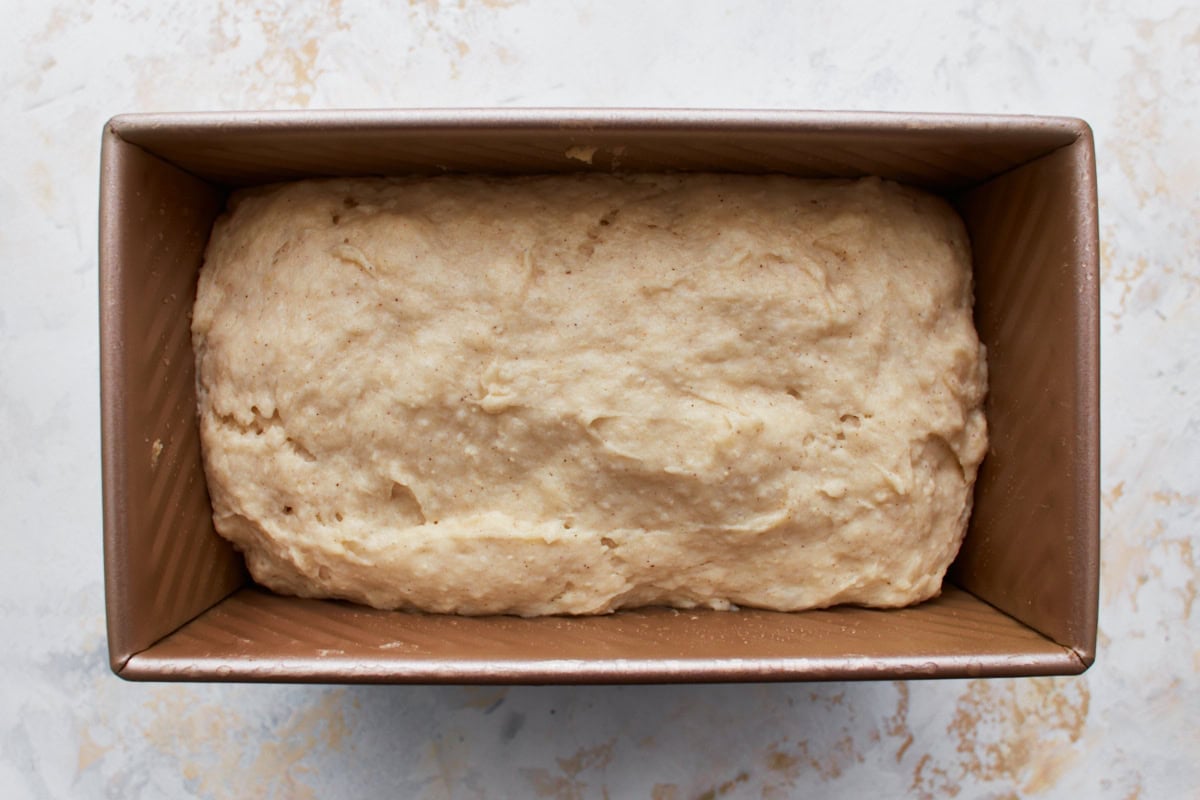
- Gluten-free dough doesn’t benefit from being over-proofed. Once the dough doubles in size, it’s time to bake!
Easy Gluten-Free Bread
Equipment
- 1 Stand Mixer
Ingredients
- 2 1/2 cups (313 g) all-purpose gluten-free flour, I like Pillsbury gluten-free flour. Not all gluten-free flours are created equal. You may experience different baking results depending on the gluten-free flour blend you choose. Bob's Red Mill 1 for 1 and King Arthur Measure for Measure state on their website and/or package that their blends are not recommended for yeast baking.
- 1 teaspoons (3 g) xanthan gum, leave out if your flour already has it in it
- 1 teaspoon (4 g) gluten-free baking powder
- 1 (7 g) packet rapid rise/instant yeast*, (2 1/4 teaspoons)
- 1/4 cup (54 g) extra virgin olive oil
- 1/4 cup (85 g) honey, You can use agave nectar or maple syrup.
- 1 teaspoon (5 g) apple cider vinegar
- 1 1/2 cups (355 g) warm water, 100-110°F
- 3 (90 g) egg whites, from large eggs and room temperature**
- 1 teaspoon (6 g) salt
Recipe Video
Instructions
- Spray a 9-inch x 5-inch bread pan or 9-inch x 4-inch small Pullman loaf pan with gluten-free cooking spray. Move the top oven rack to the middle rack. Preheat your oven to 350°F. I used both a 9-inch x 4-inch Small Pullman loaf pan.
- Add the gluten-free flour, baking powder, and instant yeast to a large bowl and stir to combine the ingredients.
- Add the olive oil, honey, and apple cider vinegar, and warm water to the flour mixture and mix on low for 1 minute. If you are using a stand-up mixer use the paddle attachment, not the dough hook.
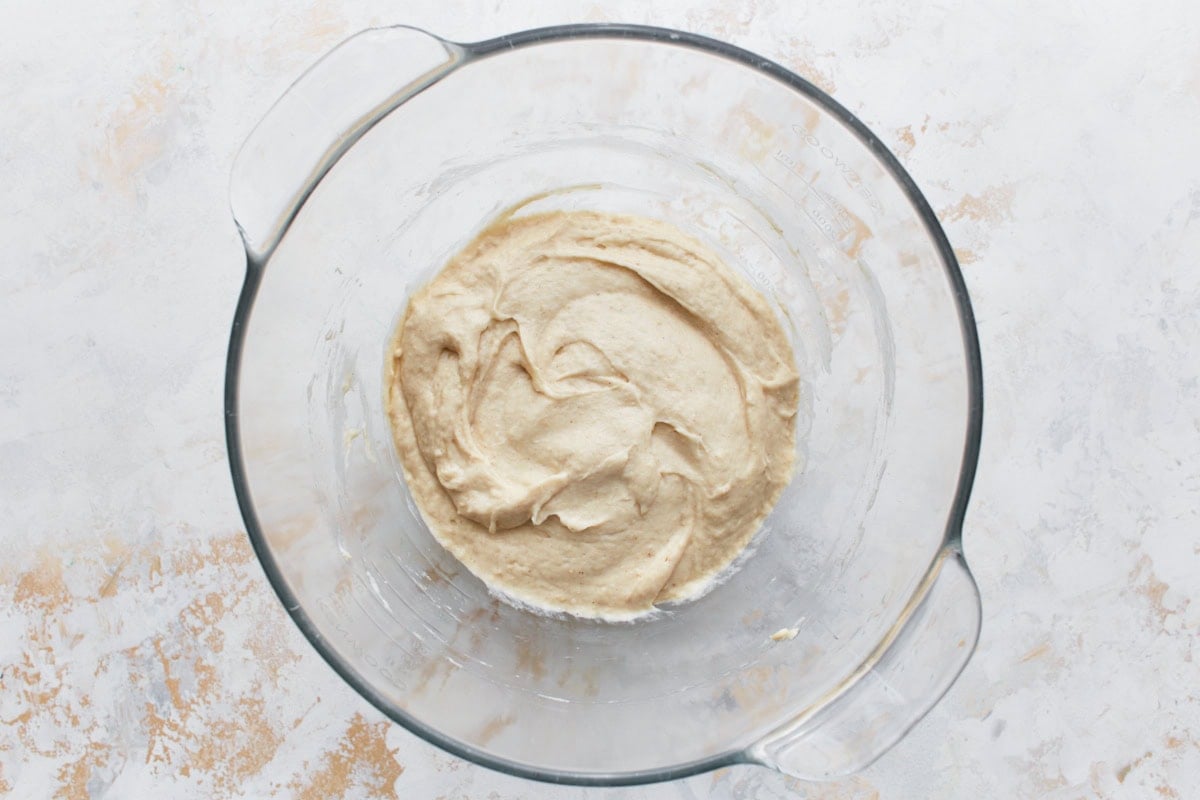
- Add the egg whites and salt to the dough and mix on medium for 1 minute. The dough will look like a thick cake batter.
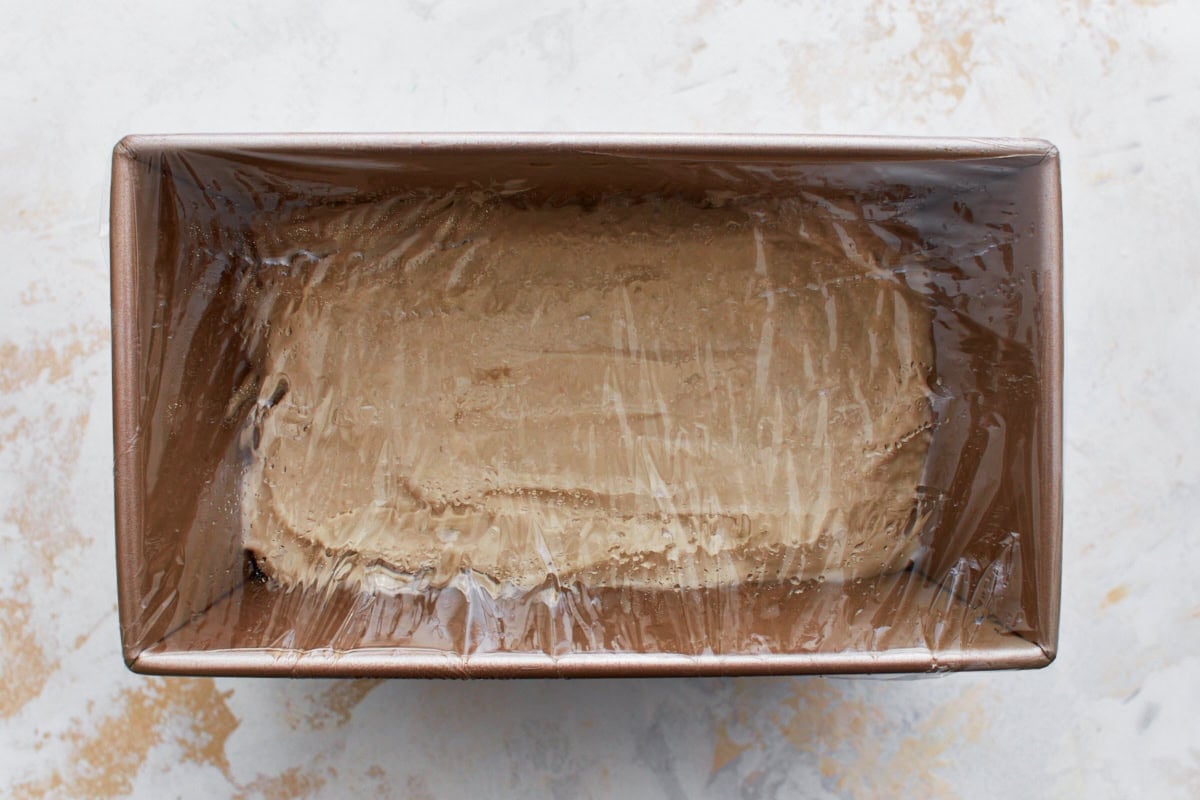
- Pour the dough into a greased 9-inch x 5-inch bread pan or the 9-inch x 4-inch small Pullman loaf pan. I HIGHLY recommend using a 9-inch x 4-inch Small Pullman loaf pan. Spray plastic wrap with gluten-free cooking spray and cover the top of the pan. Cover the pan with a kitchen towel and allow the bread to rise in a warm place for 30 minutes.
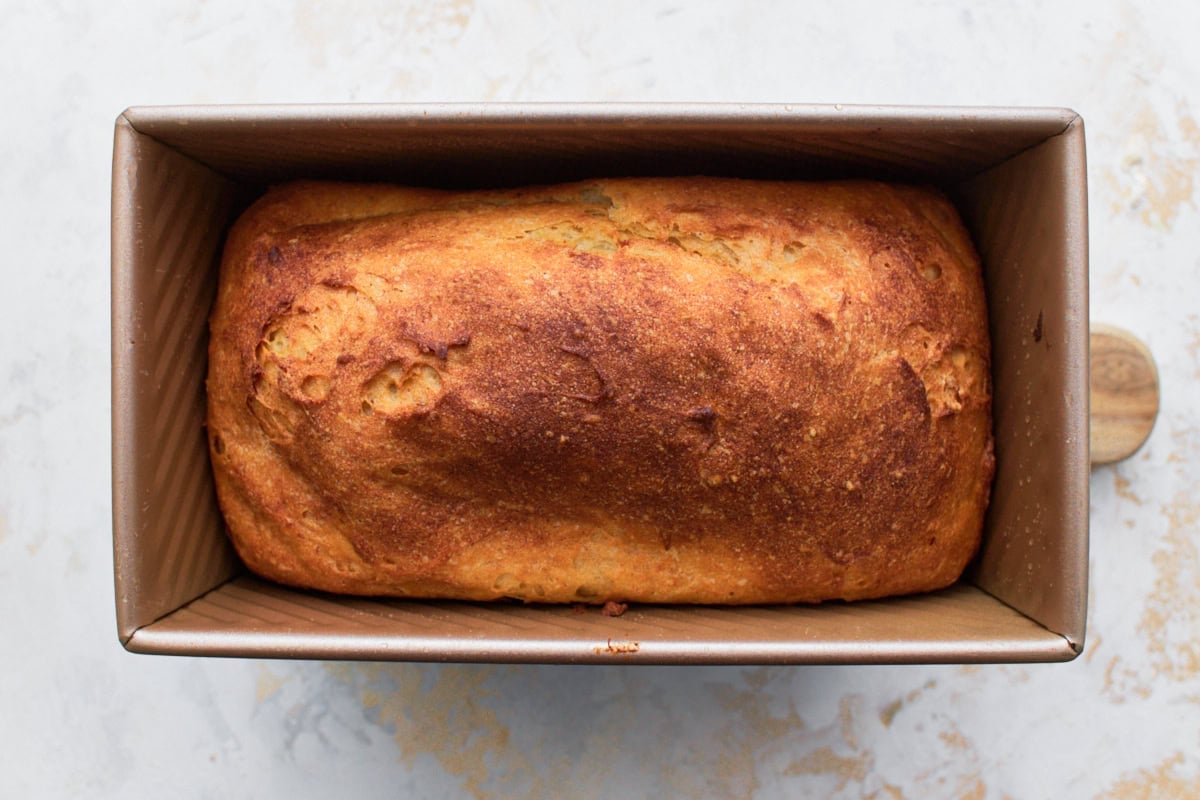
- Place in the oven to bake for 30 minutes at 350°F. Bake the bread on the middle rack horizontally. The bread will be golden brown and have the internal temperature between 205-210ºF.
- Allow the loaf to cool for 10 minutes in the pan. Remove the loaf from the baking pan and place it on a cooling rack. If the bread completely cools in the pan, the steam can get trapped and the loaf can get soggy, especially on the bottom. Allow the bread to cool completely before slicing.
- Use a serrated knife to slice the bread. Using a smooth-blade knife can squish the bread.
- Store the leftover bread in an airtight container, once it’s completely cooled. It may be kept on the counter at room temperature. It is also best not to pre-slice the bread before you store it, so just store the leftover portion of the loaf.
- The bread can be frozen once it is completely cooled. Wrap the loaf tightly in plastic wrap, then wrap it in foil or freezer paper. Place the wrapped loaf in a freezer bag. The bread can be frozen up to 3 months. Thaw the bread in the refrigerator overnight.
Notes
Nutrition
Nutrition information is automatically calculated, so should only be used as an approximation.
How to make Gluten-Free Bread Step-by-Step
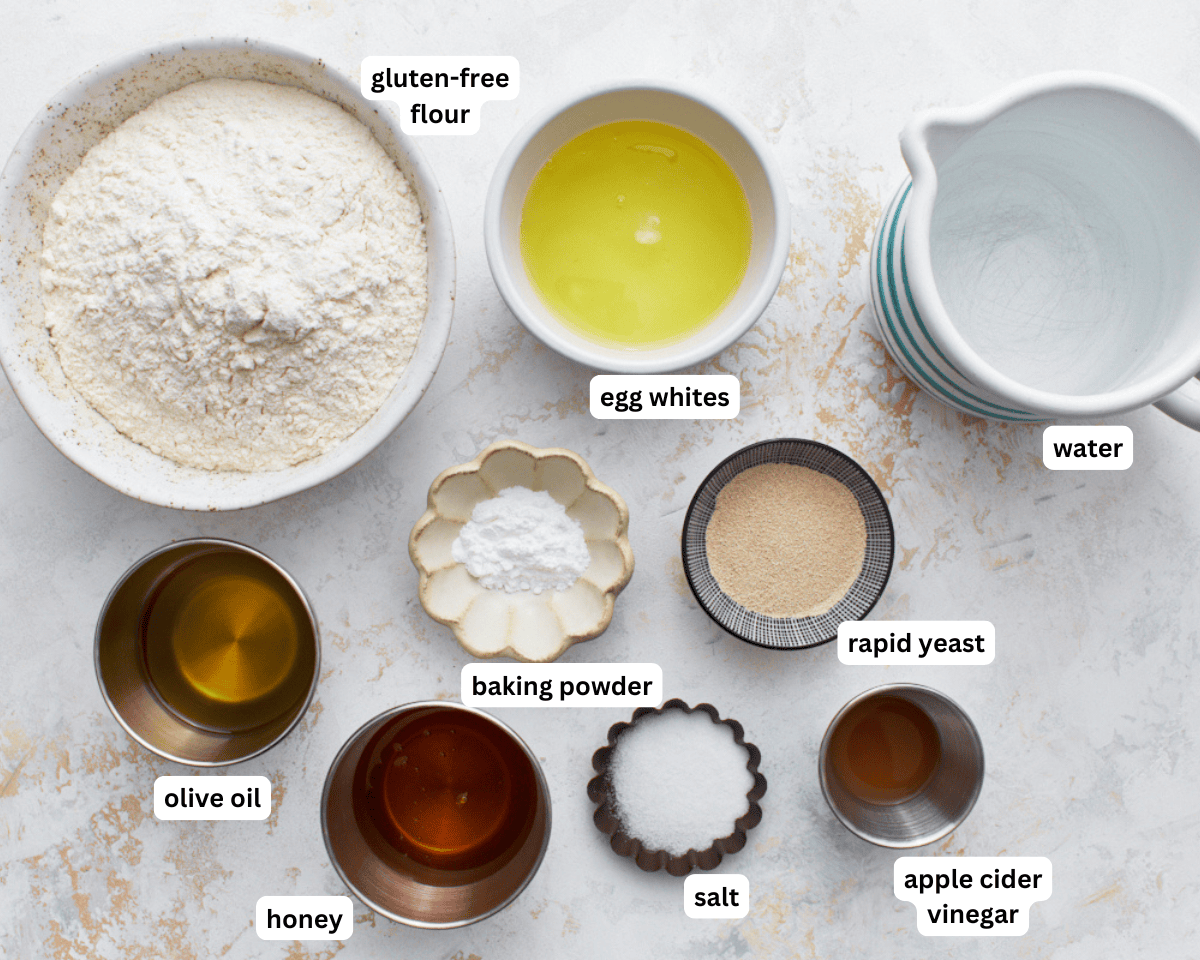
Gather your ingredients.
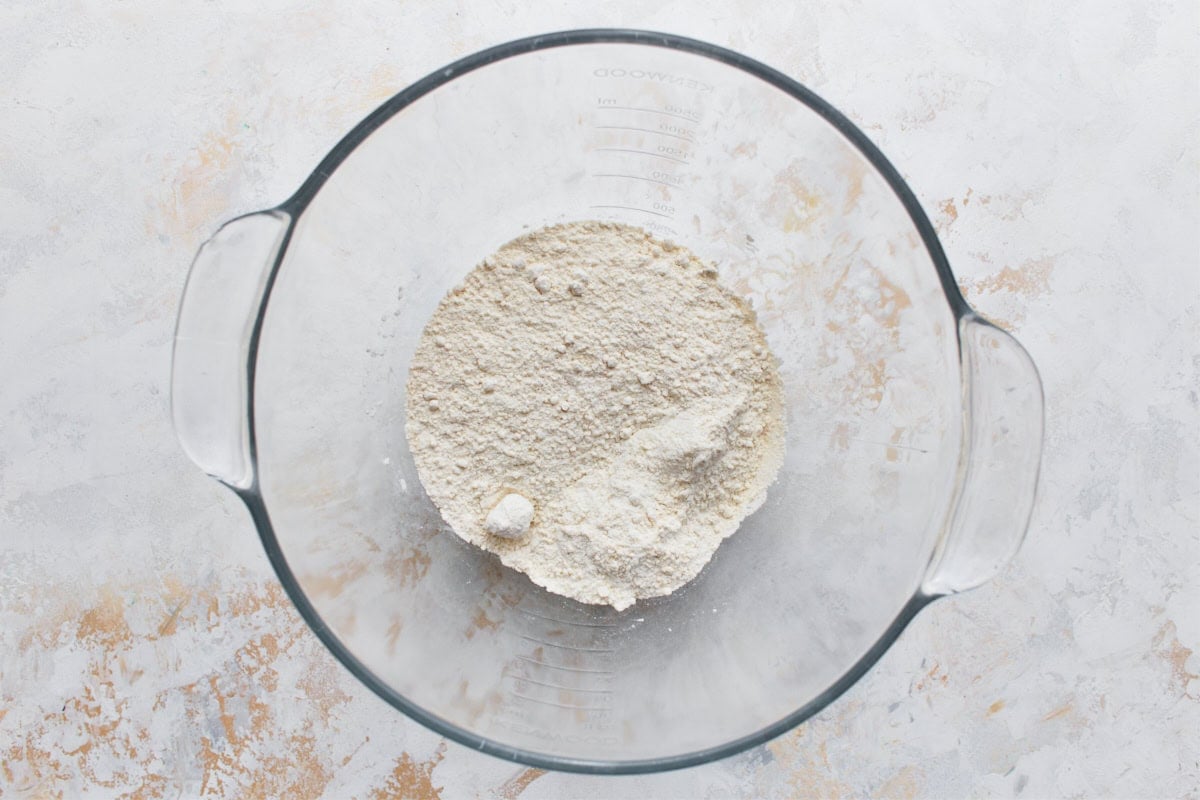
Spray a 9-inch x 5-inch bread pan with gluten-free cooking spray. Using a large bowl, add 2 ½ cups gluten-free flour, 1 tsp baking powder, and 1 packet of instant yeast. Stir to combine the ingredients fully.
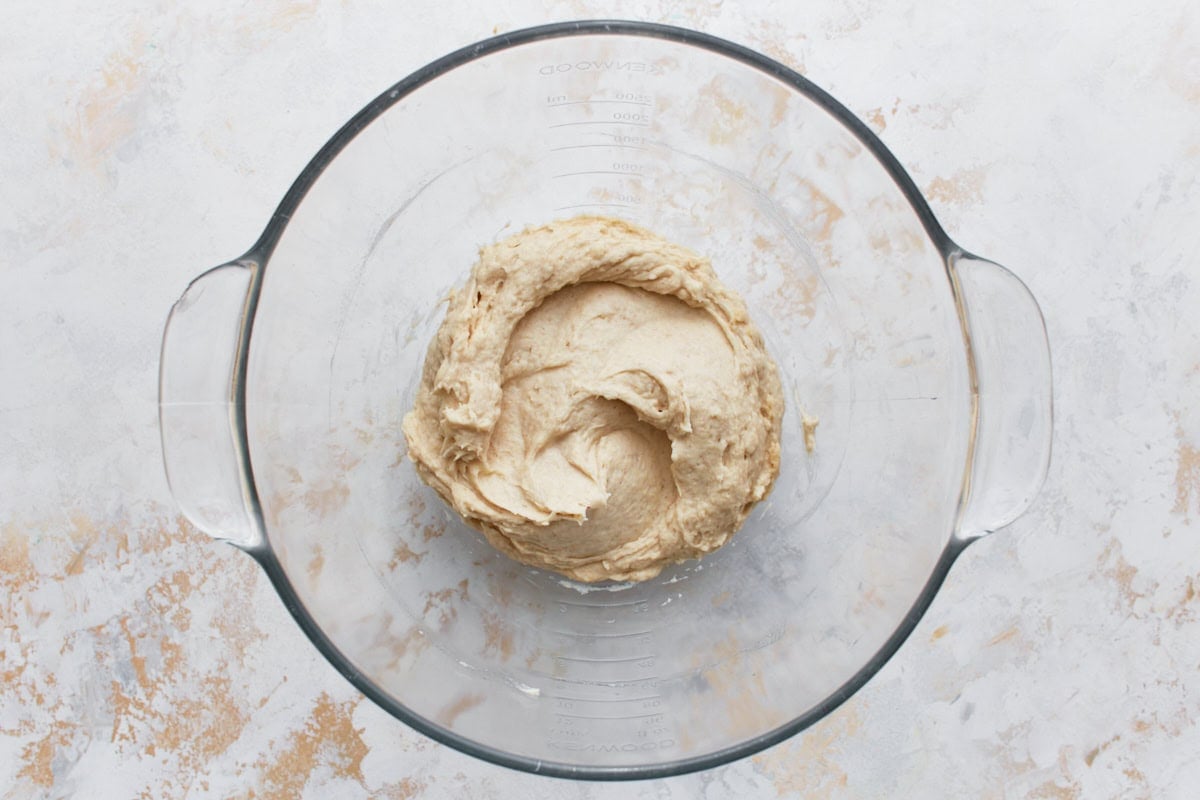
Make the dough: Add 3 large egg whites and 1 tsp salt to the dough and mix on medium speed for 1 minute. The dough should look like a thick cake batter.
Pour the gluten-free dough into the greased 9” x 5” bread pan. Place greased plastic wrap over the pan and drape a kitchen towel on top.
Proof dough: Set the dough aside in a warm area to proof for 30 minutes to rise.
Bake: Once proofed, place the bread pan on the middle rack horizontally. Bake at 350 degrees F for 30 minutes. The bread should be golden brown and reach an internal temperature between 205-210 degrees F.
Let the loaf cool for 10 minutes, remove it from the loaf pan, and place it on a cooling rack. Let the loaf cool completely before slicing.
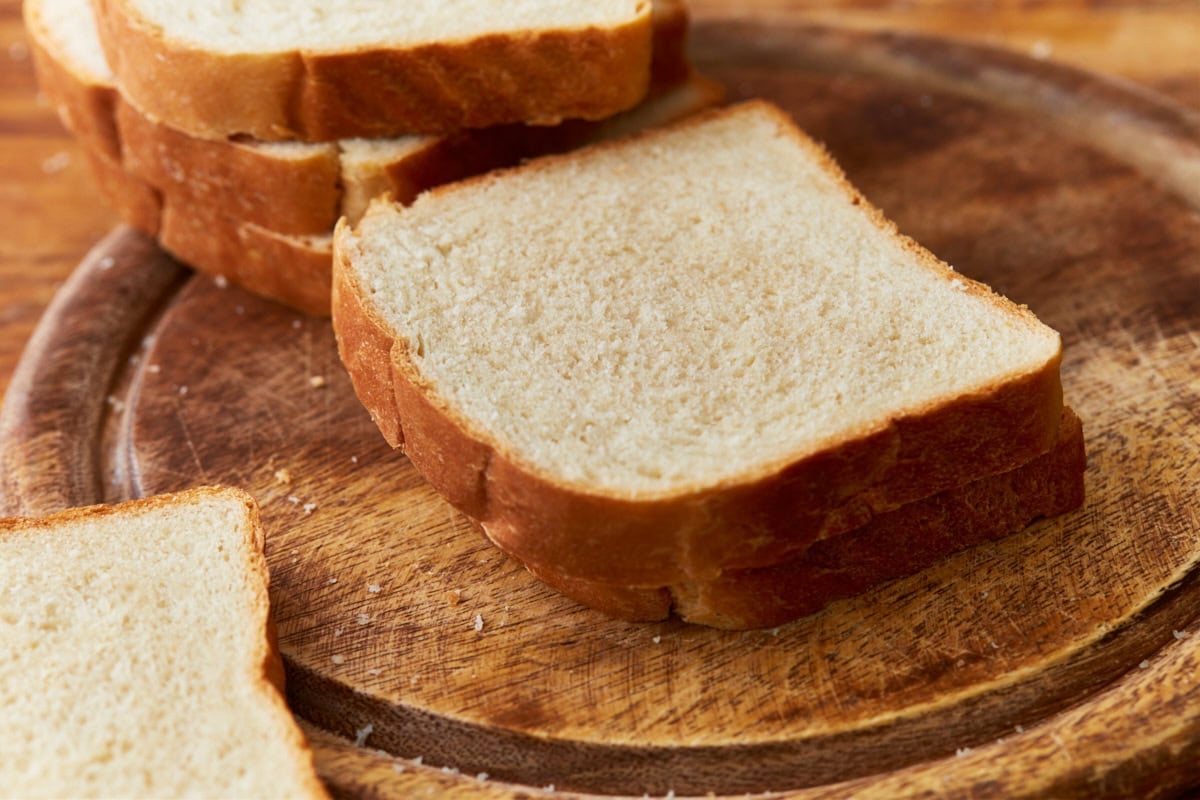
Making it in a bread machine
Even though I developed this gluten-free bread recipe to be an oven-baked recipe, I also tested it in my bread machine. Just swap out these ingredients for the ingredients in my gluten-free bread machine recipe and follow the recipe’s directions. I always recommend using a bread machine that has a gluten-free setting.
Serving Suggestions
This is an everyday gluten-free bread recipe. I make this sandwich bread for my family every week to enjoy for morning toast and sandwiches like my homemade Uncrustables.
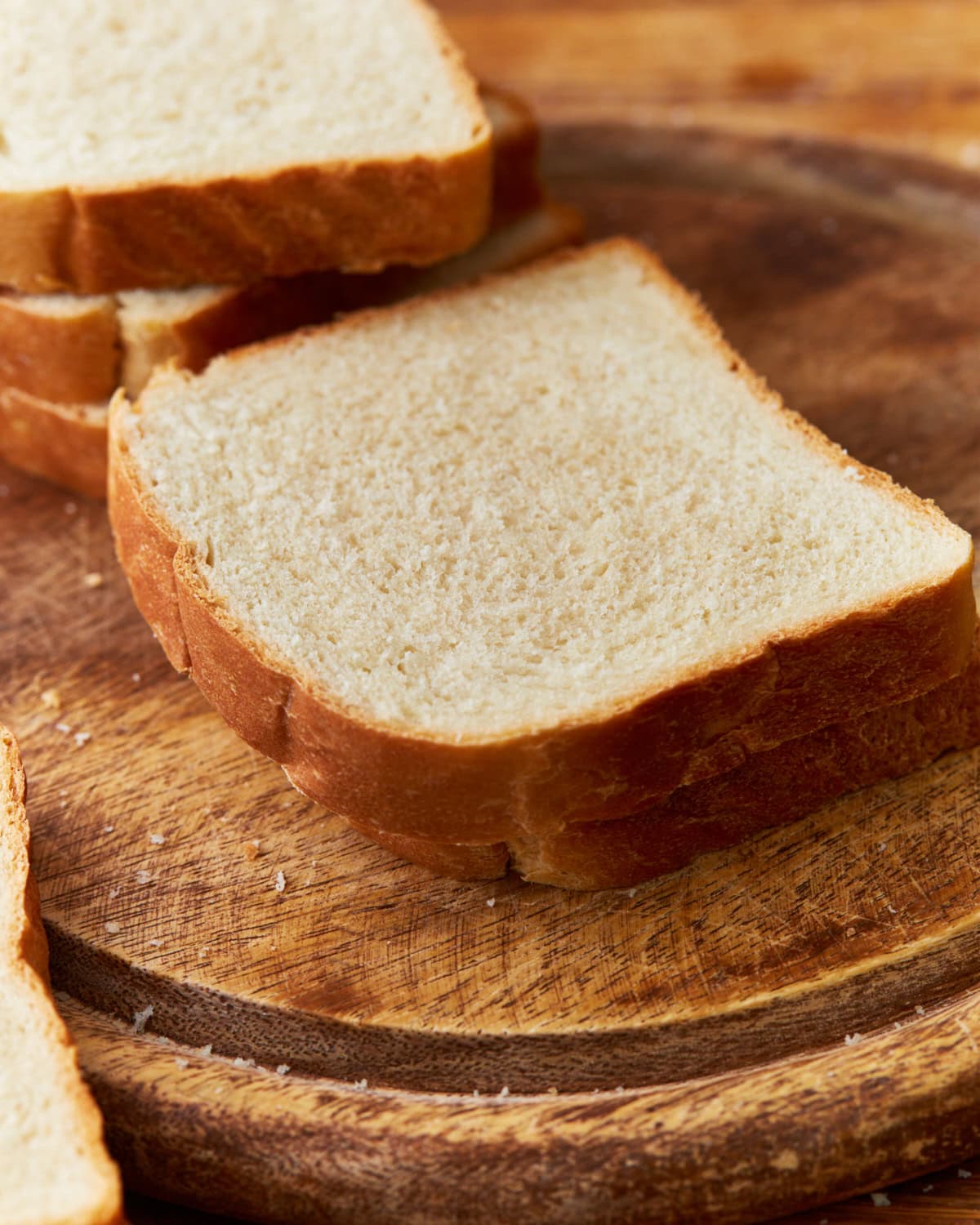
Storage Instructions
Store the leftover bread in an airtight container once it’s completely cooled. It may be kept on the counter at room temperature. It is also best not to pre-slice the bread before you store it, so just store the left-over portion of the loaf.
Place the wrapped loaf in a freezer bag. The bread can be frozen for up to 3 months. Thaw the bread in the refrigerator overnight.
More Gluten-Free Bread Recipes
- Gluten-Free Pita Bread: If you love baking simple gluten-free breads like this easy loaf, try this gluten-free pita bread. These soft, fluffy pockets are perfect for stuffing with sandwiches, wraps, or dipping into hummus and sauces.
- Gluten-Free Garlic Bread: Once you’ve mastered easy gluten-free bread, turn it into gluten-free garlic bread. It’s buttery, garlicky, and crisp around the edges—perfect for serving alongside pasta, soups, or salads.
- Gluten-Free Baguette: For a bakery-style option, try this gluten-free baguette. It bakes up with a crisp crust and soft interior, making it perfect for sandwiches, crostini, or slicing alongside dinner.








Posso usar outra farinha? Fazer um mix em casa para substituir?
Quero muito fazer a receita. Mas moro no brasil. E aqui geralmente faço mix em casa.
Me recomenda uma proporção de farinhas para montar o mix pro pão por favor 🙏
Hi Valdirene! So glad you want to make the recipe. Yes, you can use a different flour. I have a homemade gluten-free flour blend recipe on the blog that works well for yeast bread, you can find it here. Hope the bread turns out great for you!
Can you use distilled vinegar instead of apple vinegar?
Hi Brittany, yes, distilled white vinegar works fine here! It’s used in the same small amount mainly to help with the yeast’s rise and add a slight tang, so distilled vinegar can be swapped in at the same 1:1 ratio with no issues.
Would like to know if the gluten free Robin Hood all purpose flour would work on this recipe.
Hi Ron, we haven’t specifically tested this recipe with Robin Hood gluten-free flour, so I can’t say for certain. Let us know if you try it though!
I love the bread, but every time I have made it it turns out wrong. I have been using Pillsbury gluten free flour as recommended and I loved the taste of the bread, but it was really crumbly. I barely even touch it and it broke. It is also very dry after the second day. I store it in a bread bag I have from store bought bread with a twist tie on it. I’m not sure what I am doing wrong, but I want to continue making this bread, but I don’t like how messy it is. I would love advice on how to make it better for sandwiches.
Hi Grace, A couple of things likely explain this. Crumbly bread that falls apart easily is almost always a flour measuring issue, if you’re scooping straight from the bag instead of spooning it in and leveling it off, you end up with too much flour, which dries out the crumb. The dryness by day two is probably storage, a thin bread bag with a twist tie isn’t airtight enough, so switch to an airtight container and keep it as a whole loaf until you’re ready to eat it. Also use a serrated knife when slicing, since a smooth blade compresses the bread instead of cutting through it cleanly. Fix the flour measuring and storage and you should get a much sturdier, sandwich friendly loaf.
I made this recepie with the cup4cup flour and it turned out so beautifully! But that flour is so expensive. I usually make my own flour. If I just use ground up groat flour with xantham gum would it be the same as the pillsbury?
Hi Kymberlee, Good question, but straight ground groat flour plus xanthan gum won’t give you the same results as Pillsbury or Cup4Cup. Those blends work because they combine several starches, like rice flour, potato starch and tapioca starch, which is what creates a light structure and proper rise, especially in yeast breads. Groat flour is a single whole grain flour with no starch blend behind it, so it bakes denser, absorbs more liquid and has a much stronger earthy flavor, and xanthan gum alone can’t make up for that difference. If cost is the issue, our homemade gluten free flour blend is worth trying. It’s designed to mimic those store bought blends and can save you money over time compared to buying Cup4Cup or Pillsbury regularly.
Might need to make altitude adjustments baking at a mile high and or whip the egg whites. Dough collapsed when baking and used convection. Website keeps crashing too on my phone
Hi Dan, At a mile high, I’d cut back the yeast just a touch and shorten the rise time so the dough doesn’t over-proof, since it rises faster up there. Adding a little extra liquid can help too, since the dry air pulls moisture out of the dough faster at elevation. For convection, I’d drop the temperature by about 25°F from the 350°F in the recipe. Convection ovens bake hotter and can set the outside before the inside is finished, which is likely why the dough collapsed. I wouldn’t whip the egg whites for this one, since it’s not part of how this recipe is built and could actually work against the structure rather than help it. As for the website crashing on your phone, I’m sorry about that! I’ll pass that along to get looked into, that’s definitely not something you should have to deal with while just trying to bake.
Hello! I love this bread recipe, and I’ve tried baking it two times now but it has never cooked all the way through. It comes out gummy and uncooked. Is there any reason it may be doing this? Would scoring the top help it bake? Lower temp, longer in the oven maybe?
Thank you!
Hi Rowan, First, check your flour. If it’s Bob’s Red Mill 1-to-1, that’s likely the issue, it’s not recommended for yeast baking and tends to leave the center gummy no matter how long you bake it. I’d switch to Pillsbury gluten-free flour, which is what I developed this recipe with, or King Arthur’s gluten-free bread flour. If you’re already using a yeast-friendly flour, use an instant-read thermometer instead of time or crust color as your guide, and pull the loaf at 205-210°F in the center. If the crust browns too fast, tent it loosely with foil after the first 15-20 minutes. I’d also double check you’re using the 9×4 small Pullman pan rather than a 9×5, since the narrower pan bakes more evenly.
I’ve made this recipe three times and haven’t gotten it to turn out. Hoping I can get some help troubleshooting? I make recipes from this author all the time and they usually turn out great. I use Bob’s Red Mill 1-to-1 baking flour as it has xanthan gum already included in the flour. Every time I’ve made this recipe it’s come out gummy and looking under baked inside. I tried baking it longer and even checking the temperature with a thermometer and it still didn’t turn out.
Hi Kristen, It’s likely the flour. Bob’s Red Mill 1-to-1 actually says on its own packaging that it’s not recommended for yeast baking! I’ve found that holds true in my testing too. It can leave the center gummy no matter how long you bake it. I’d recommend trying Pillsbury gluten-free flour, which is what I developed and tested this recipe with, or King Arthur’s gluten-free bread flour.
This is truly amazing! I have had to go gluten free, definitely not by choice, and a lot of the of bread I’ve tried is not good at all. This bread actually has the texture, softness and look of wheat bread. I am very happy I can have toast and sandwiches again!
The flavor is really good,the only issue I’ve been having is in the baking,I bake it for the right time and until the internal temp is between 205-210 and after cooling the bottom still looks doughish
Probably a user error less recipe issue however the flavor is very nice.