Gluten-Free Flatbread

Published
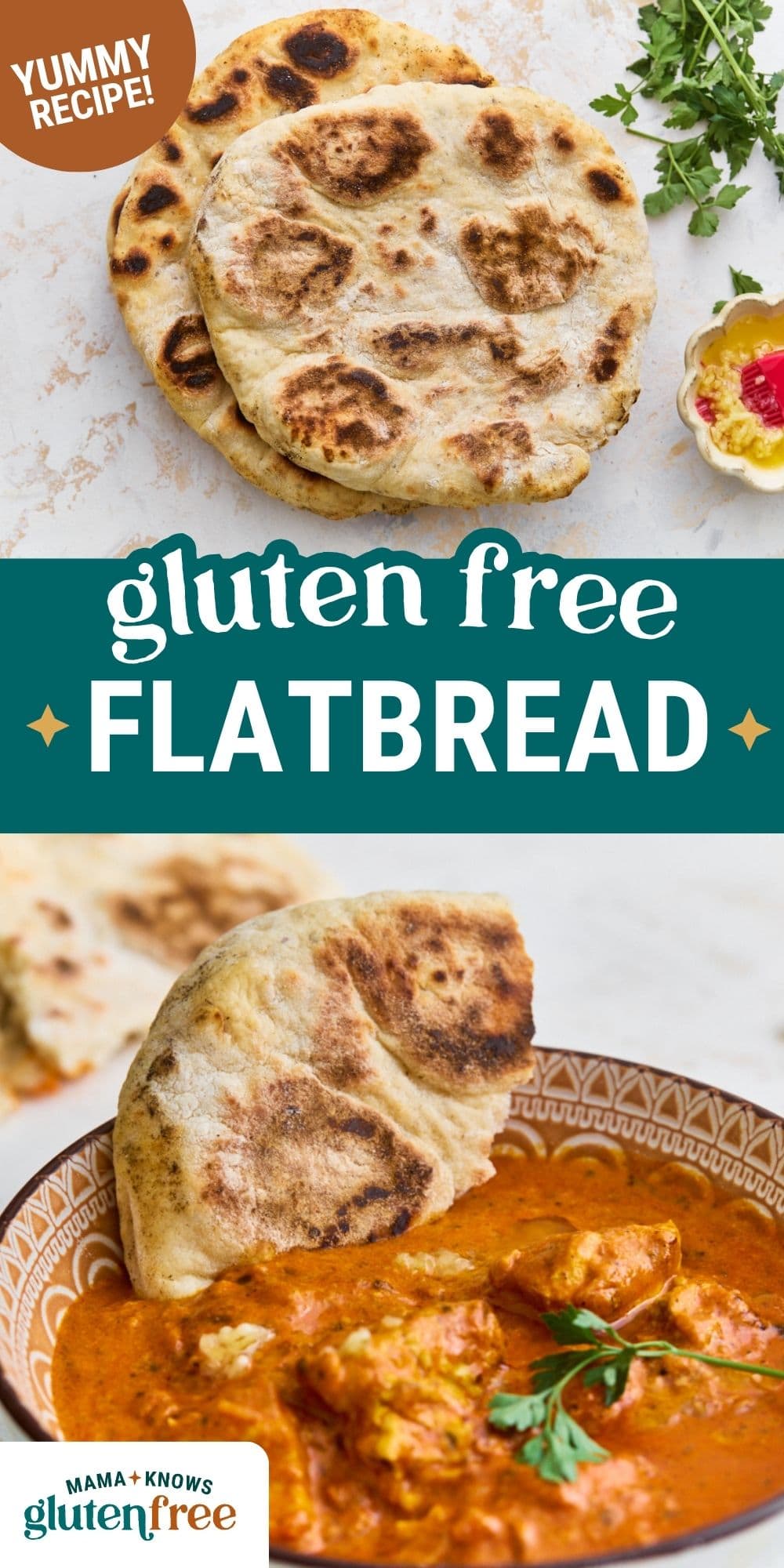
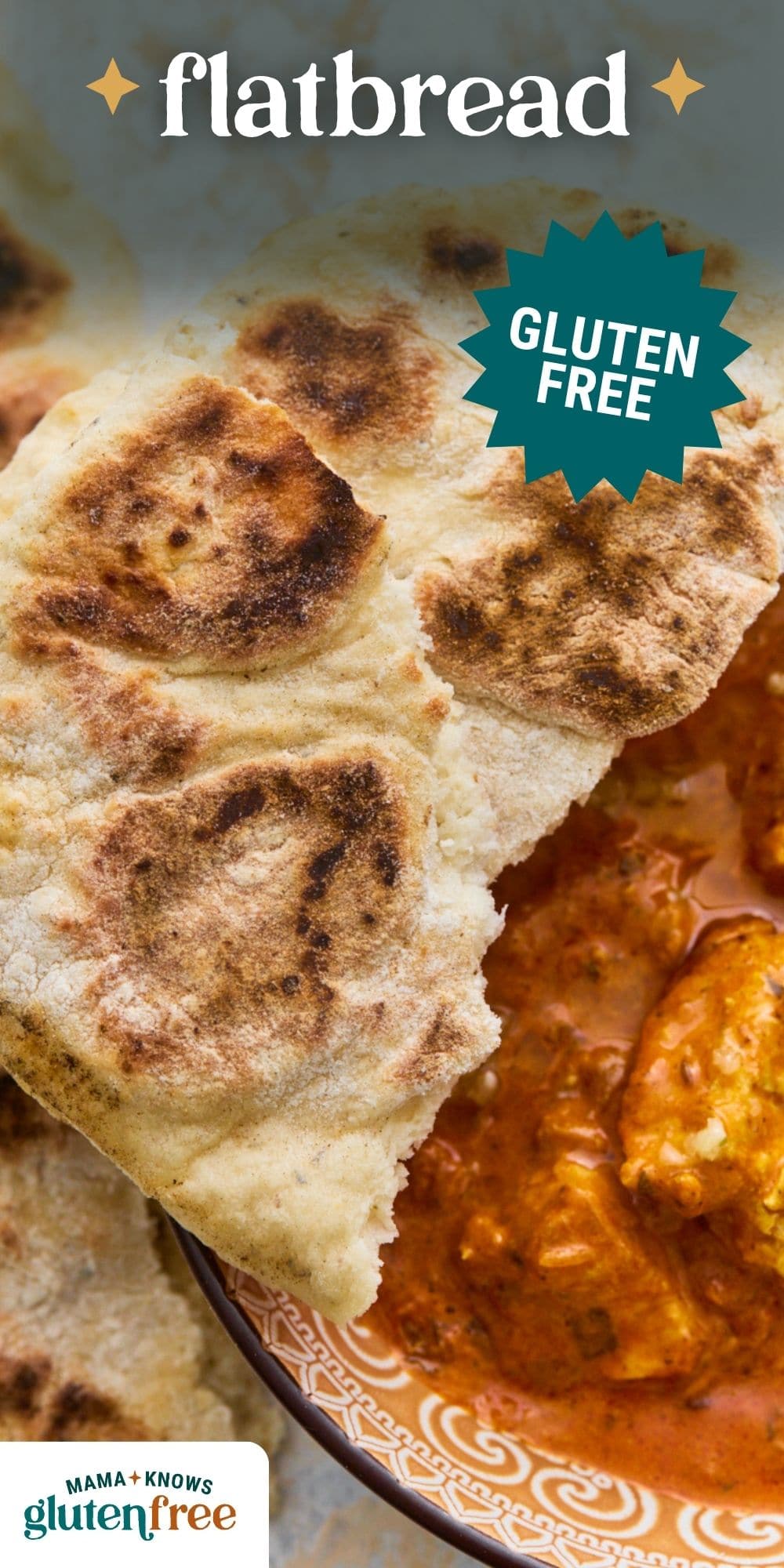
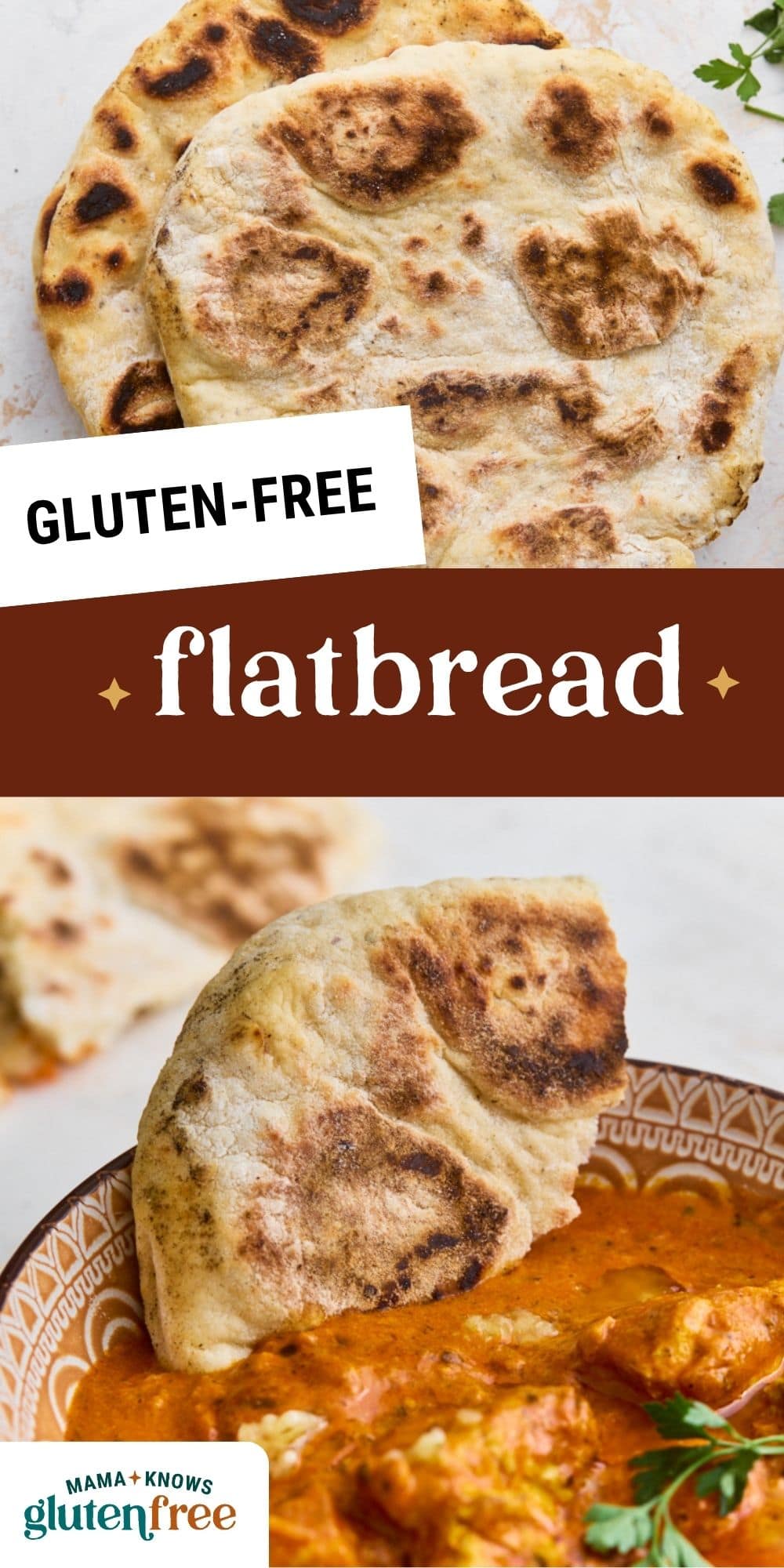
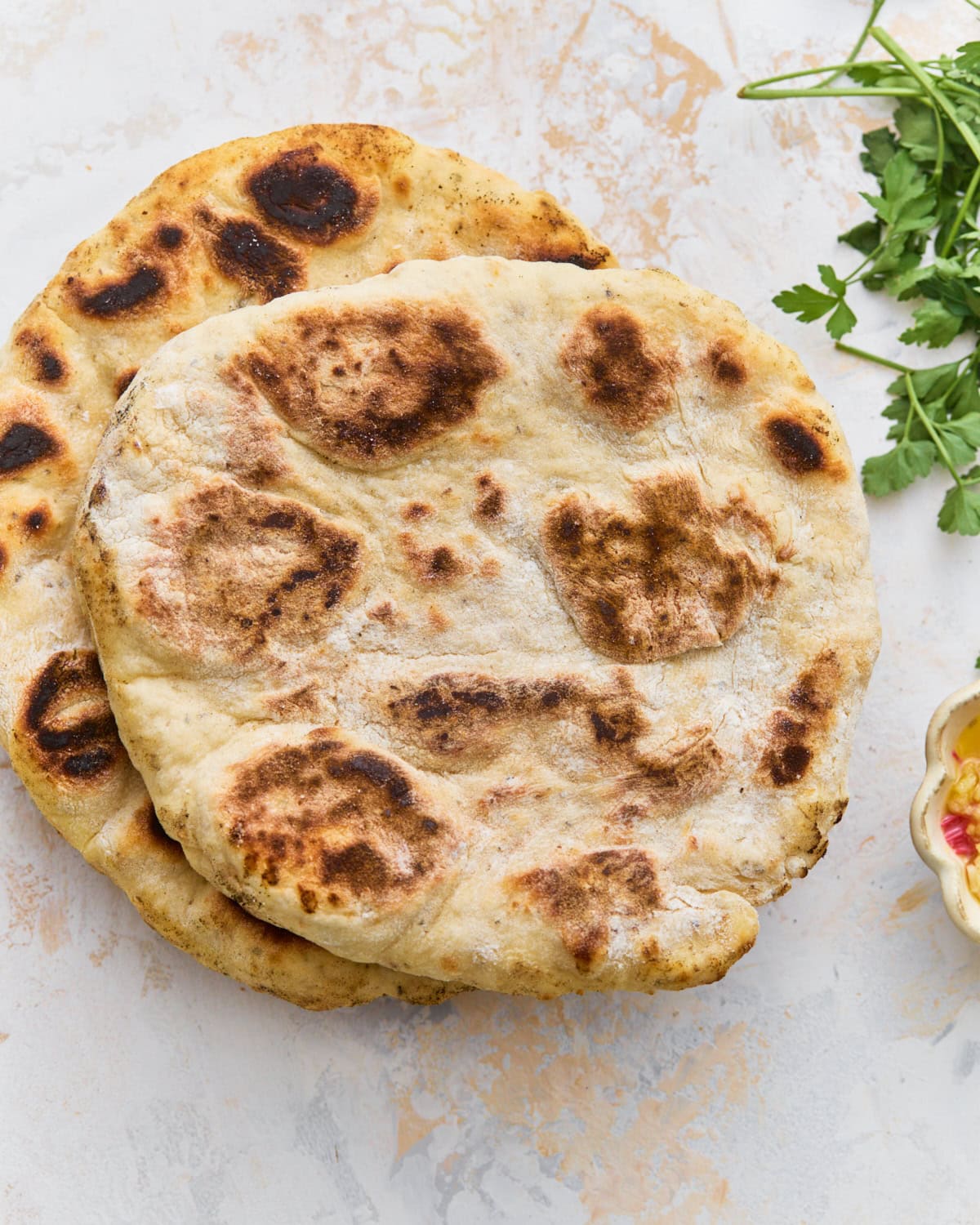
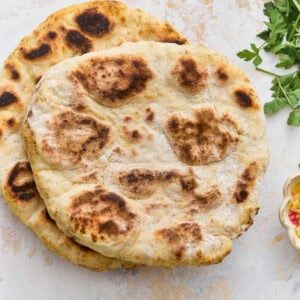
This gluten-free flatbread recipe is so quick and easy to make, it had me wondering why I ever bought flatbreads at the store to begin with. Made with less than 10 ingredients and on the table in just 35 minutes, I love that I can make these fresh, hot flatbreads any day of the week. They go with just about any meal and are perfect for dipping!
“This recipe worked great…I used these flatbreads as pizza crusts, and my gluten-free soy-free wife who’s been deprived of pizza for years was finally able to enjoy it. My parents tried some of the plain flatbread and thought it was delicious, and they’re not even gluten free! Thank you so much for helping my wife finally enjoy pizza again.”
– Conifer
What Makes This Flatbread Dough So Forgiving
I love how simple it is to make flavorful homemade flatbread at home with this easy gluten-free flatbread recipe. I keep coming back to it because it’s so forgiving, even when my pantry only has one gluten-free flour blend on hand instead of my usual favorite. Like gluten-free naan bread and gluten-free pita bread, this dough comes together in one bowl with no yeast and no rise time, so you’re never more than 35 minutes from a warm, pliable flatbread.
When I retested this recipe, I found the amount of yogurt needed to get that texture actually changes depending on your flour blend, which is why I now recommend adding it gradually instead of measuring the full amount upfront (more on exactly how below). You’ll know the dough is ready when it looks soft and slightly tacky to the touch, not wet or sticky, and holds together easily when you gather it into a ball. These flatbreads are naturally egg-free and easy to make dairy-free, so they fit into pretty much any meal.
My Pro Tip
The Sticky Dough Fix
If your flatbread has turned out gummy in the middle before, it’s almost always a hydration issue, not a cooking-time issue.
Gluten-free flour blends aren’t all built the same way. Some are thirstier than others, and your kitchen’s humidity plays a role too. That’s why this updated recipe has you start with 1 cup of yogurt instead of mixing in 2 cups right away. Add the yogurt and butter, then check your dough: it should be soft and easy to shape, tacky but not sticking to your fingers when you press it. If it’s still shaggy or dry, mix in more yogurt a tablespoon at a time. If it feels wet or clings to your hands, work in a little extra flour the same way.
The second half of the fix is heat. A pan that’s too hot browns the outside before the inside cooks through, which is what leaves that raw, gummy center even after it looks done. Keep your burner at low-medium the whole time, and resist the urge to crank it up to save a few minutes.
What I learned While Testing
- Start with 1 cup of yogurt. The dough should be soft and tacky, not sticky or wet. If you’re using a different flour blend than Bob’s Red Mill 1:1, expect to adjust the amount slightly since gluten-free flours absorb liquid differently.
- Roll between parchment, not on a floured surface. Dusting your work surface with extra flour works its way into the dough as you shape it, which dries it out and makes the finished bread tough instead of soft.
- Watch your pan, not the clock. Every stovetop runs a little differently, so use visual cues instead: the dough should look matte and start showing small bubbles on top before you flip it, and each side should turn light golden brown.
- Keep the heat at low-medium the whole time. This is the one step I wouldn’t cut corners on. A pan that’s too hot browns the outside before the inside finishes cooking, which is the main reason gluten-free flatbread turns out gummy in the middle. If your oil starts browning too fast in the pan, wipe it out with a paper towel and re-spray before the next flatbread.
Gluten-Free Flatbread
Ingredients
- 2 cups (280 g) gluten-free all-purpose flour with xanthan gum
- 2 tsp (8 g) baking powder
- 1 tsp (3 g) garlic powder
- 1 tsp (2 g) dried oregano
- ½ tsp (3 g) salt
- 1 cup (245 g) full-fat plain Greek yogurt, add more if needed, 1 tbsp at a time
- 1 Tbsp (15 g) unsalted butter, melted but not too hot
Instructions
- In a medium bowl, whisk together gluten-free flour with xanthan gum, baking powder, garlic powder, dried oregano, and salt.
- With an electric mixer on low speed, add yogurt and melted butter to the dry ingredients and beat on low just until combined (about 1-2 minutes). Do not overmix. Use a spatula to blend in any dry ingredients that may have settled in the bottom of the bowl.
- Separate the dough into 4 equal parts (this is about 165 grams of dough per flatbread).
- Using a rolling pin between two sheets of parchment paper (to avoid the dough sticking to the rolling pan and table), roll each ball of dough out to about ¼-inch thickness. They don’t have to be perfectly round but if you want to smooth out the edges you can with a slightly damp finger.
- Heat a large frying pan over low-medium heat on the stovetop. Once heated, spray with non-stick cooking spray. If the oil starts to brown too much into the pan, gently & carefully wipe it out and re-spray. Oil that’s starting to burn will transfer into the flatbread and turn the flatbread an unappetizing brown color.
- Place one flattened flatbread dough in the frying pan and heat over low-medium heat for about 2 to 3 minutes (until the bread has started to brown slightly) then flip and cook for another 2 to 3 minutes on the other side until it is fully cooked. It is important to cook these over a low-medium heat so that they don’t burn before they’re fully cooked through. They should be lightly browned all over but not starting to burn.
Notes
- Start with 1 cup of Greek yogurt and add more, a few tablespoons at a time, until the dough is soft and workable but not sticky.
- Use extra gluten-free flour only for rolling and shaping, not for the dough itself.
- Results may vary depending on the gluten-free flour blend used and kitchen humidity.
- Store in an airtight container at room temperature for up to 3 days, or freeze with parchment between pieces for up to 3 months.
Nutrition
Nutrition information is automatically calculated, so should only be used as an approximation.
How to Make Gluten-Free Flatbread Step by Step
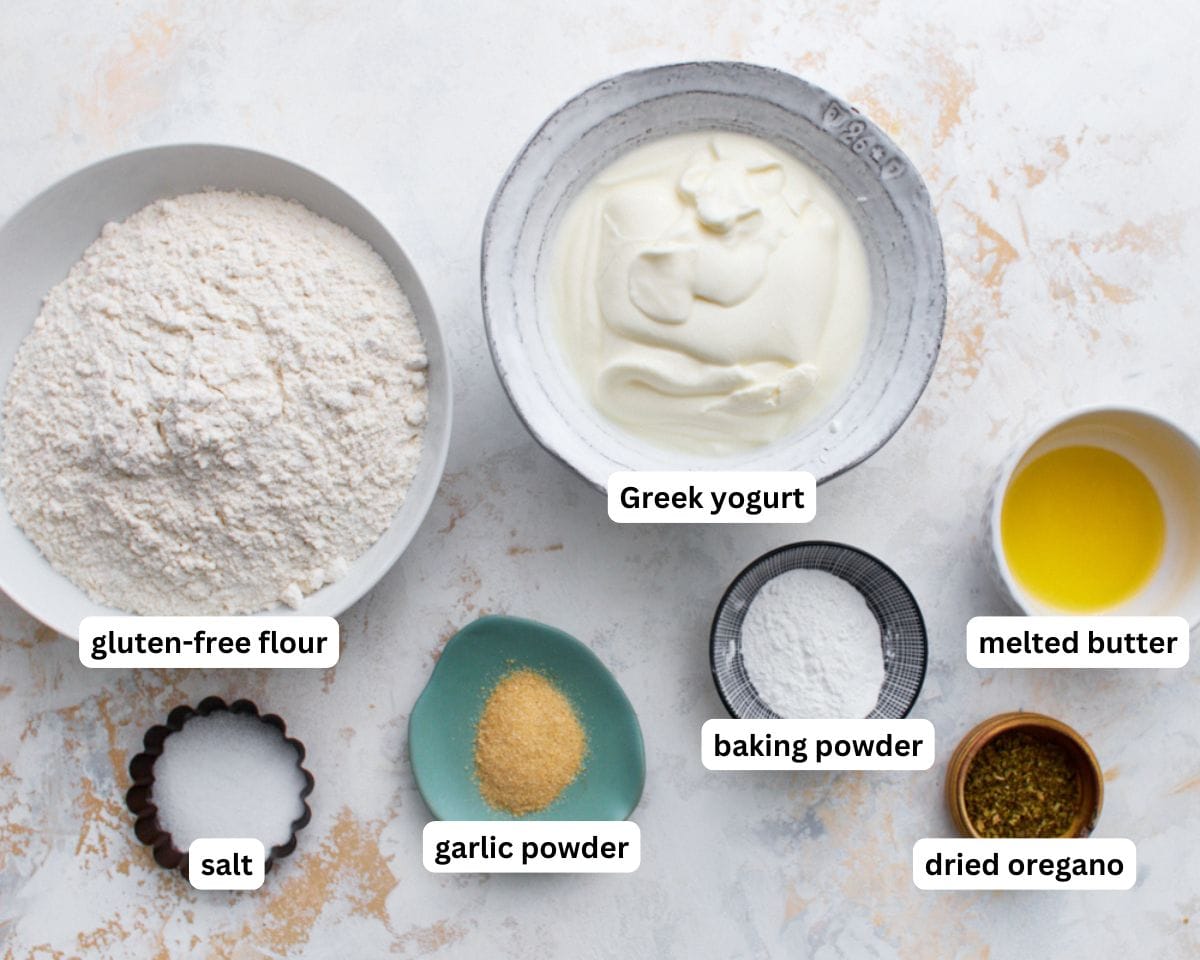
Gather all the ingredients together.
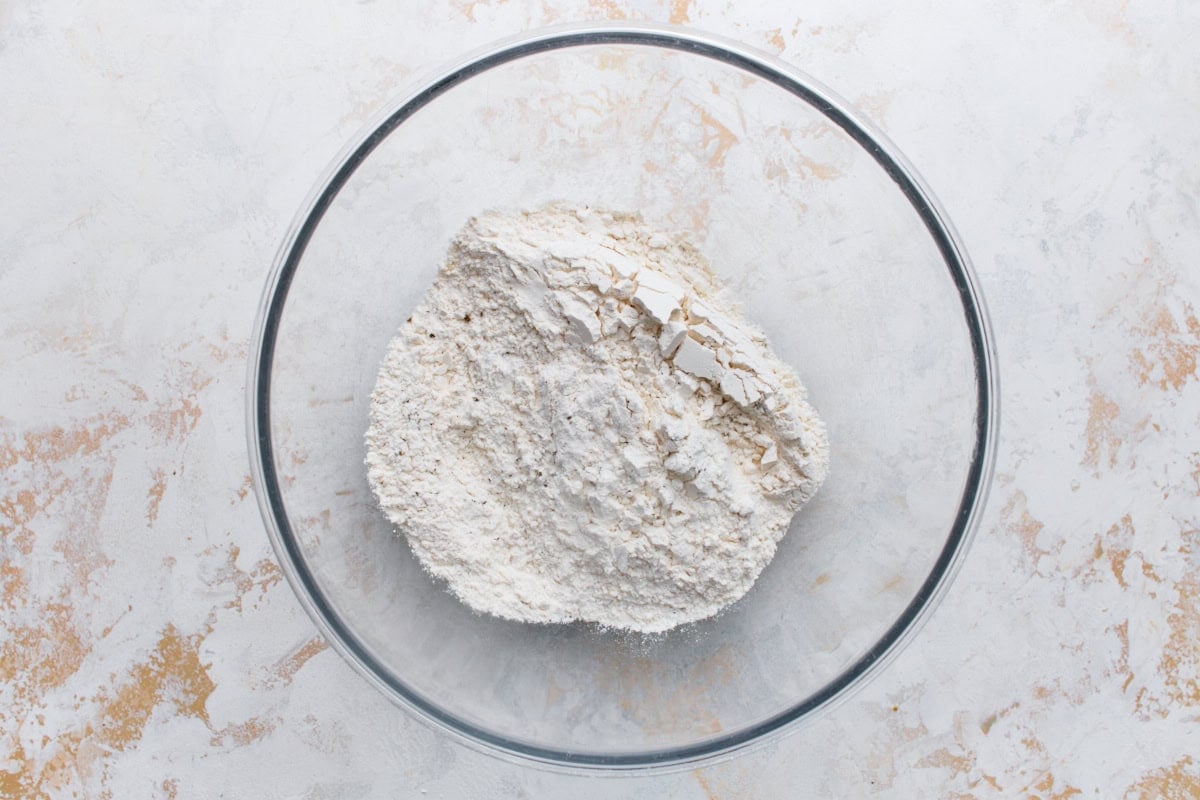
Mix the dry ingredients: In a medium bowl, whisk together 2 cups gluten-free all-purpose flour (280g), 2 tsp baking powder (8g), 1 tsp garlic powder (3g), 1 tsp dried oregano (2g), and ½ tsp salt until evenly combined.
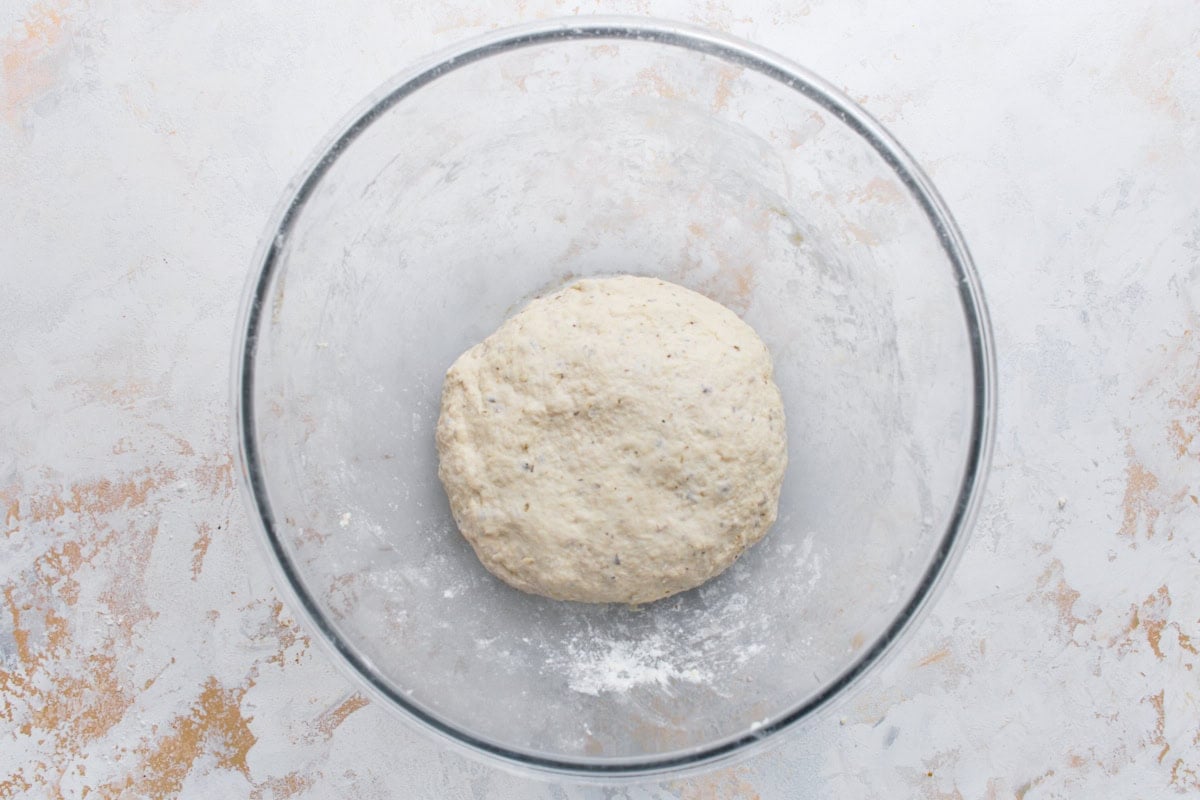
Add the wet ingredients: With an electric mixer on low speed, add 1 cup of the Greek yogurt (245g) and the melted butter (15g) to the dry ingredients. Beat on low for about 1-2 minutes, just until combined. Don’t overmix. Use a spatula to scrape up any dry flour that settles at the bottom of the bowl. The dough should come together into a soft ball that’s tacky but not sticky to the touch. If it still looks dry and shaggy, mix in more yogurt a tablespoon at a time until it holds together.
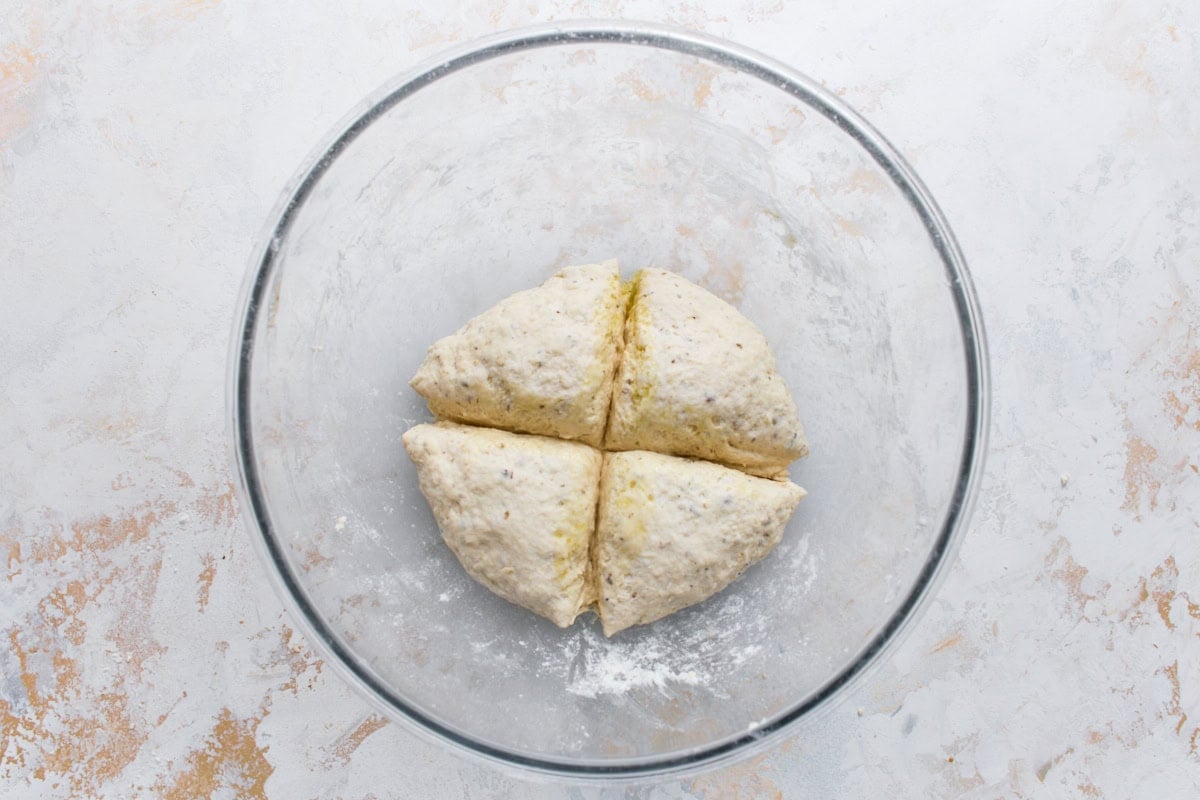
Divide the dough: Split the dough into 4 equal pieces, about 165g each if you’re using a kitchen scale.
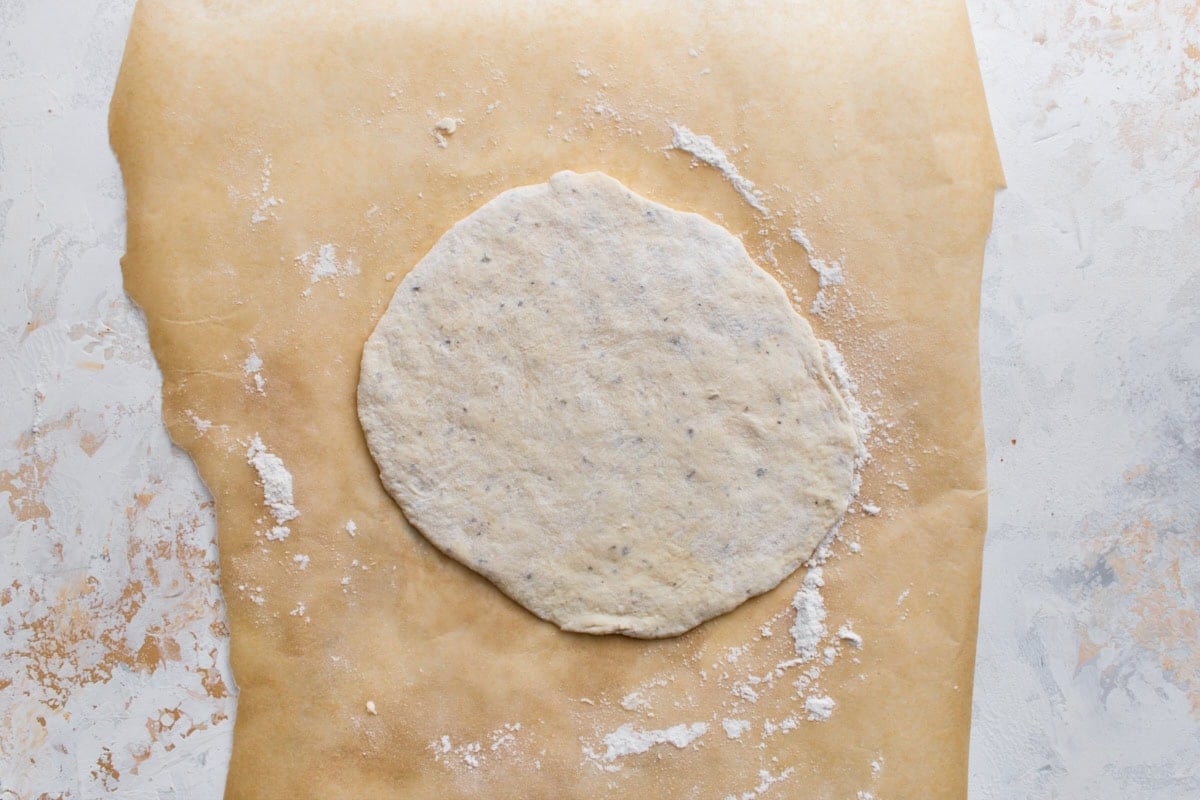
Roll each piece: Place one piece of dough between two sheets of parchment paper and roll it out with a rolling pin to about ¼-inch thickness. The edges don’t need to be perfectly round. If you want to clean them up, smooth them with a slightly damp finger.
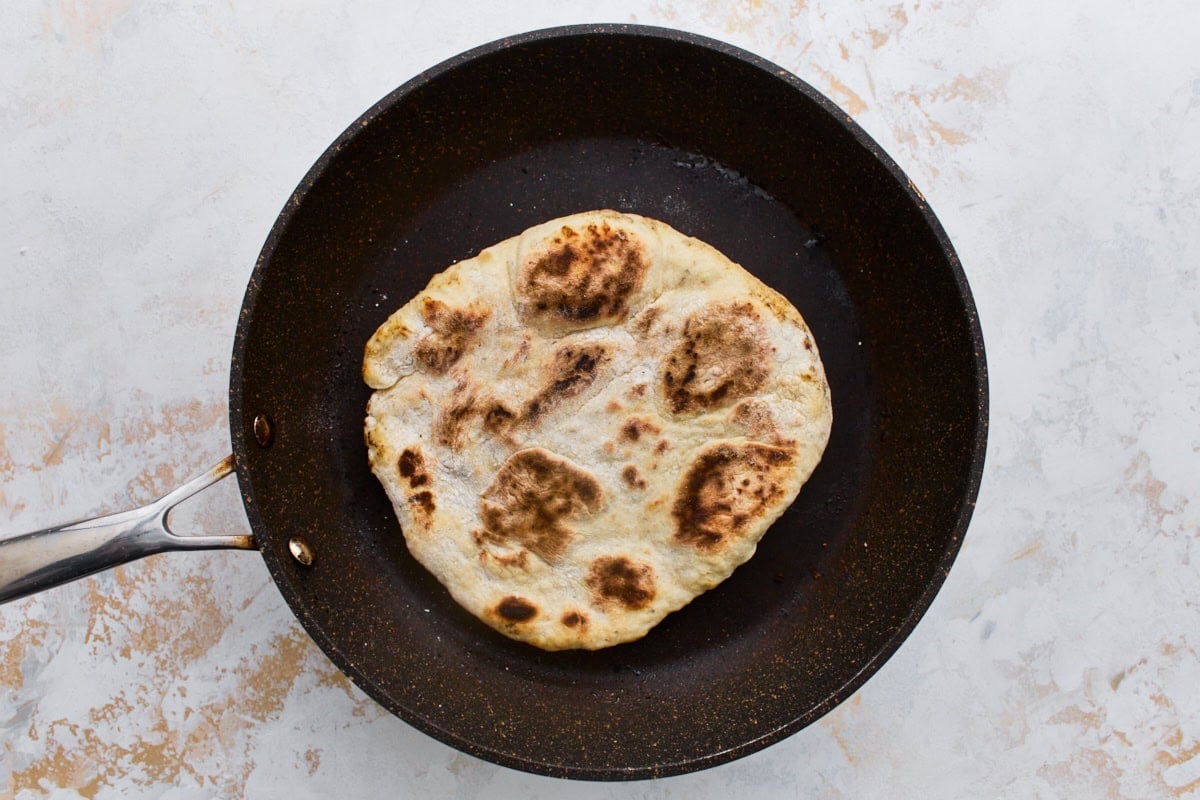
Cook the flatbread: Set a large frying pan over low-medium heat. Once it’s hot, spray it with non-stick cooking spray. If the oil starts browning too much in the pan, carefully wipe it out and re-spray before continuing. Oil that’s starting to burn will turn your flatbread an unappetizing dark color instead of a golden one. Place one rolled-out dough round in the pan.
Cook for 2-3 minutes, until the underside has started to brown slightly and small bubbles form on the surface, then flip and cook another 2-3 minutes on the other side until fully cooked through. Keep the heat at low-medium the whole time so the inside cooks before the outside burns. Each flatbread should be lightly browned all over, not blackened.
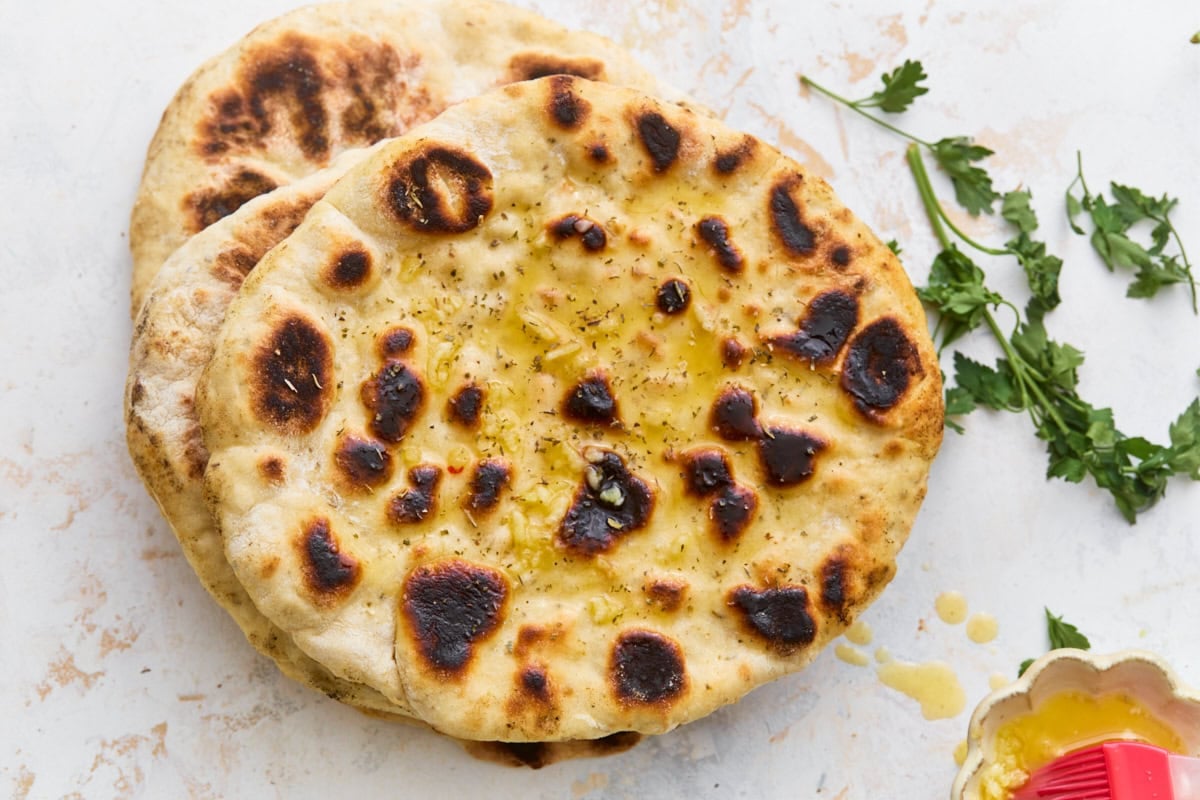
Repeat and serve: Repeat with the remaining dough, re-spraying the pan between batches as needed. Transfer each finished flatbread to a plate and cover loosely with a clean kitchen towel to keep them warm and soft while you cook the rest. Serve warm.
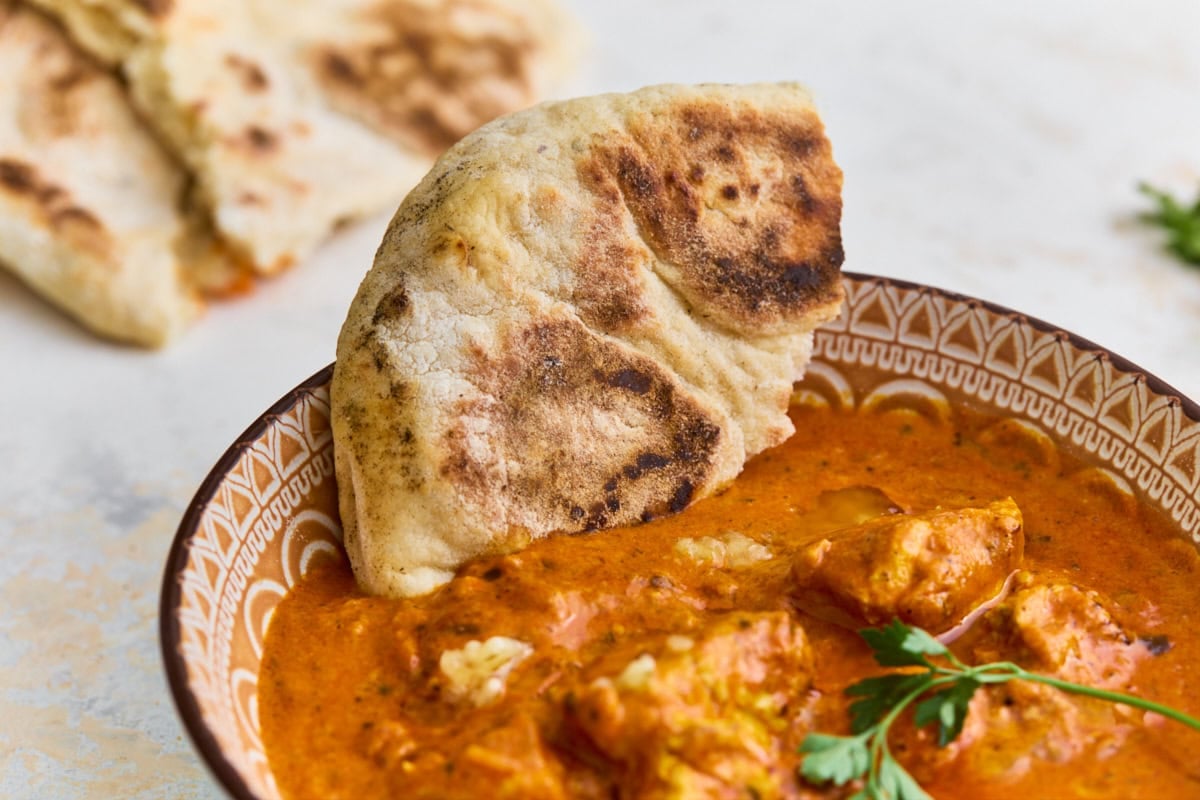
Serving Suggestions
The classic way to serve this flatbread is warm, right out of the pan, torn into pieces alongside a meal, since it’s built for scooping up dips and sauces. Dairy-free tzatziki is my go-to here, since the garlic and dill in the sauce echo the garlic and oregano baked into the bread.
When I want a heartier meal, I use this flatbread as a wrap. I’ll pile on Moroccan chicken, fold it up, and eat it like a handheld dinner, since the bread is sturdy enough to hold the spiced chicken and sauce without falling apart. It’s also become my go-to for soup night. I’ll ladle out a bowl of my gluten-free potato soup and tear off pieces of warm flatbread for dipping, an easy, cozy dinner that comes together in about the same time it takes the soup to heat through.
Storage Instructions
Store gluten-free flatbread in an airtight container at room temperature for up to 3 days.
Freezing
You can also freeze them with parchment paper between each one to prevent sticking, for up to 3 months. Let thaw overnight in the refrigerator before reheating.
Reheating
To reheat, warm the flatbread in a dry skillet over medium heat for about 30 seconds per side, or in a 350°F oven wrapped in foil for about 5 minutes.
More Flatbread Recipes to Try
- Farinata: A naturally gluten-free chickpea flatbread that’s baked instead of pan-fried, so if you want a thicker, custardy interior with a crisp top, this is the one to try next.
- Socca: Also made from chickpea flour, but cooked thinner and crispier than farinata. It’s a good option if you’re avoiding grains entirely and still want that same skillet-to-table simplicity.
- Arepas: A corn-based flatbread with a totally different texture and origin, split open and stuffed like a sandwich. Try these if you loved how versatile this flatbread is for wraps and want another handheld option.
Our Gluten-Free Flatbread recipe was originally published 5/31/24. It was retested, reworked, and republished to be better than ever 8/19/26.








THIS WAS SO EASY AND SOOOOO GOOD, THANK YOU
Recent research has found that xanthan gumis not good for the human body. What can be used as a healthier alternative?
Hi Karen, thanks for raising this! Xanthan gum is studied and classified as Generally Recognized As Safe (GRAS) by the FDA — it’s a natural fermentation-derived fiber used in many everyday foods, not just gluten-free baking. Like other fibers, it can cause mild digestive discomfort in some people if consumed in large amounts, but the small quantities used in baking (typically ¼–1 tsp per recipe) are within normal, safe levels for most people.
That said, if you’d prefer to avoid it, a few common alternatives work as binders in gluten-free baking:
Guar gum — used in a similar ratio
Psyllium husk powder — great for structure and chew, especially in breads
Ground flaxseed or chia seeds mixed with water (a “gel”) — a more natural option, though it can add a slightly nutty flavor and denser texture
Keep in mind these aren’t always 1:1 swaps, and texture results can vary, so you may need to test in smaller batches first. Thanks again for the question!
What could I substitute for the yogurt? I can’t have dairy. Would a plain Greek dairy free yogurt work just as well?
Hi Susan, yes you can use your favorite plain, unsweetened dairy-free yogurt.
I make whole milk keifer at home. Can you use that in place of yogurt?
Hi JoAnn, we haven’t tested this with kefir, but it likely won’t work as a direct swap. This recipe uses full-fat Greek yogurt specifically for its thick consistency, and hydration is the key variable for getting a soft, tacky dough. Kefir is thinner and more pourable than Greek yogurt, so using the same 1 cup would likely make the dough too wet. If you want to try it, start with much less (maybe ⅓ to ½ cup) and add slowly, checking the dough consistency as you go — you may need extra flour too. Let us know how it goes!
This recipe worked great! I used King Arthur’s gluten free flour, and all I needed was two extra tablespoons of water and it was perfect. I used these flatbreads as pizza crusts, and my gluten-free soy-free wife who’s been deprived of pizza for years was finally able to enjoy it. My parents tried some of the plain flatbread and thought it was delicious, and they’re not even gluten free! Thank you so much for helping my wife finally enjoy pizza again.
Yay! Thank you!
Have you ever tried this with a whole grain flour?
Hi Lauren, we have not!
Can I add grilled veggies on top before cooking through to make a savory flat bread? Or will it prevent the bread from rising properly?
Hi Taryn, we have not tried that, but more than likely, the moisture from the veggies will inhibit the rise. We recommend serving them on the side!
delish cooked 4-5 min each side.and cover the pan
Mine is not cooking through. It’s still doughy in the middle. What could be the reason? I used Bob’s Red Mill 1-1 Baking flour.
Hi Liz, we recommend lowering the heat and letting them cook for longer!
I think it tastes delicious.