Oat Flour Pancakes

Published
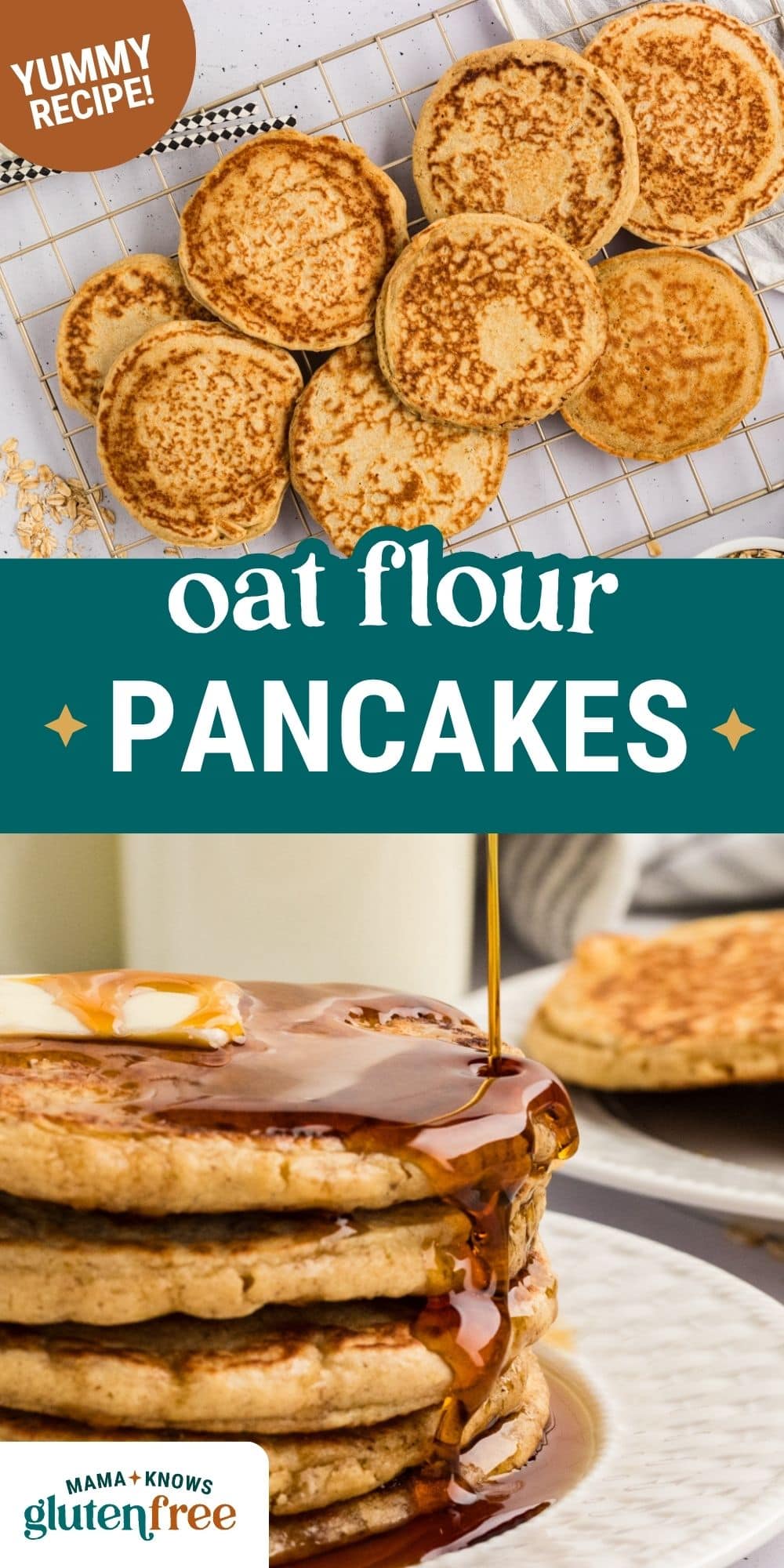
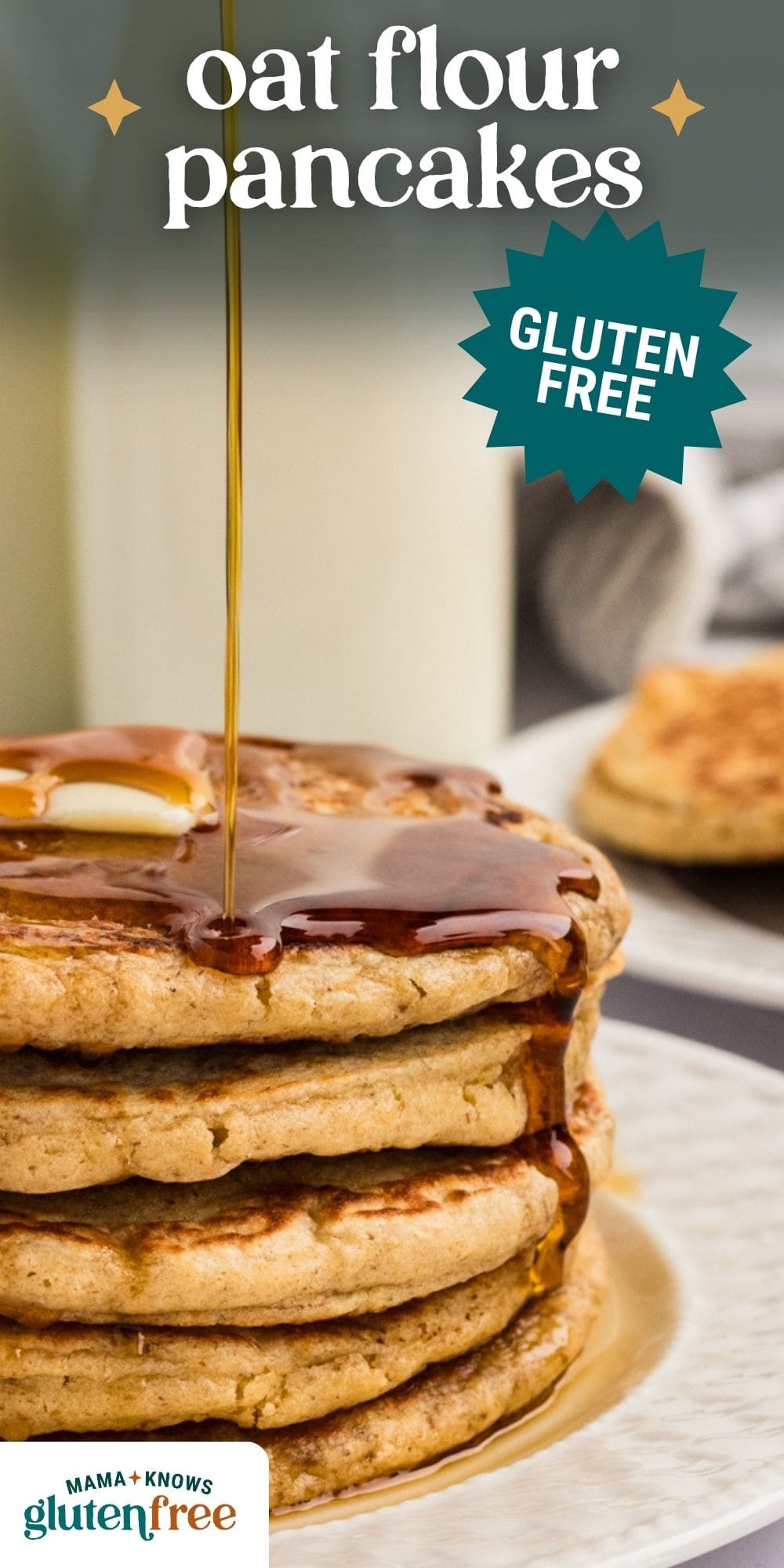
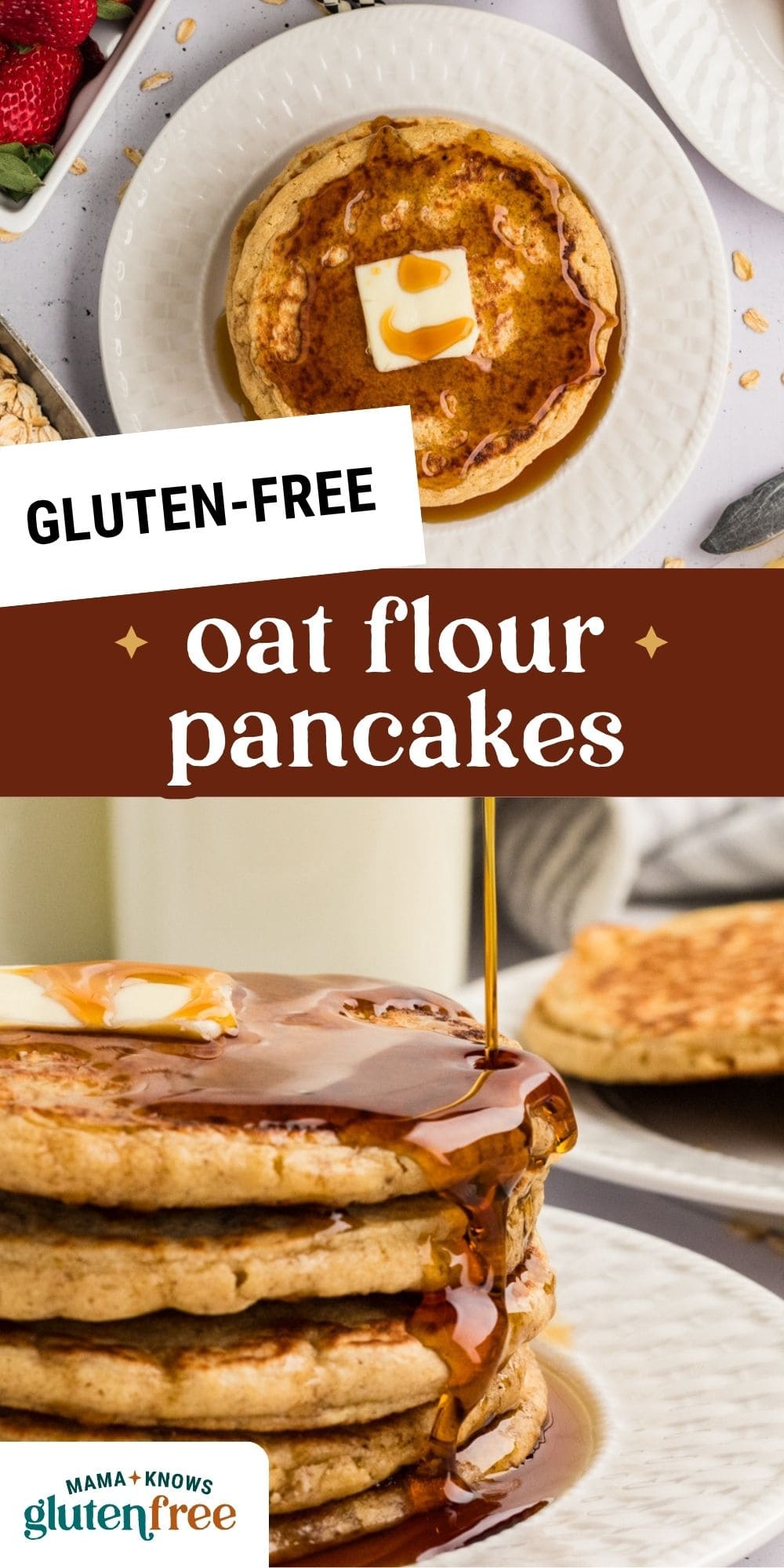
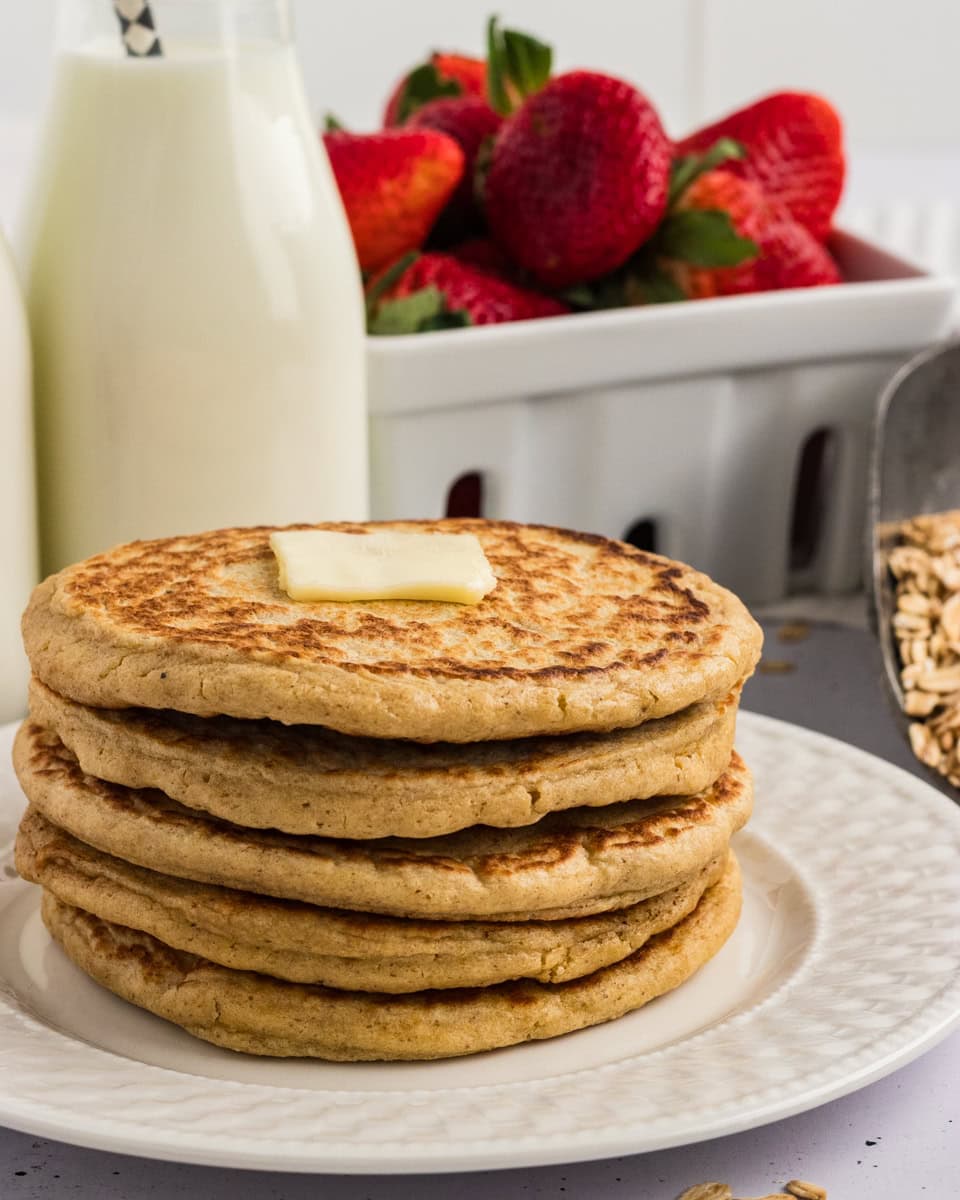
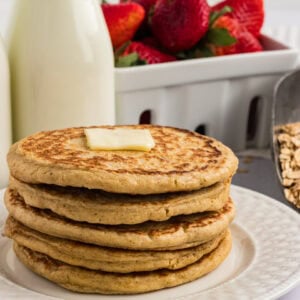
This is the oat flour pancake recipe that actually tastes like a regular pancake. You’ll whisk milk, eggs, and vanilla together, stir in oat flour, baking powder, and salt, then fold in melted butter, all in one bowl. After a quick 15-minute rest, you’ll have a thick, scoopable batter that fries up into soft, golden pancakes in about 5 minutes flat. They’re fluffy, lightly sweet, and just barely oat-y, with a tender crumb that holds up to a flood of maple syrup. Whether you’re gluten-free by necessity or just have a bag of oat flour to use up, these are the lazy Sunday morning pancakes you’ll want to make on repeat.
Oat flour pancakes were actually one of the first recipes I mastered when I first went gluten-free. Out of all the wheat-free flours lining the shelves, oat flour seemed like the least intimidating place to start, and pancakes felt like a low-stakes way to test it out. What I didn’t expect was how easy it was to get it wrong the first few times. Oat flour has a reputation for turning out dense, gummy pancakes that fall apart in the pan, and I get it, because I landed there myself more than once. It has no gluten to give the batter structure, and it soaks up liquid much more slowly than wheat flour, so if you skip the resting step, you’ll end up with thin, wet batter that spreads too much and tears when you flip it.
I tested this recipe with and without the 15-minute rest, and the difference was enormous. Batter that rested was noticeably thicker, held its shape in the pan, and cooked into pancakes with real height and a soft, springy bite. Batter that didn’t rest spread thin and cooked up flat and a little gritty. That short wait is doing all the work here. It gives the oat flour time to fully hydrate, which is the whole secret to a fluffy, tender oat flour pancake instead of a flat, dense one, and it’s exactly what took my early attempts from disappointing to what’s now one of my go-to breakfasts.
Make Your Own Oat Flour
Simply grind old-fashioned rolled oats in a blender until the consistency is that of flour, with no visible oat pieces left behind. A few pulses followed by a full blend usually gets you there in under a minute; the texture should feel fine and powdery, just like a bag of store-bought oat flour.
I wouldn’t recommend using quick oats for this. The processing method is usually different than that of old-fashioned oats, and that difference can lead to different results in your baked goods. Stick with old-fashioned rolled oats, and you’ll always have a gluten-free flour on hand, even on the mornings you’re out of the store-bought bag.
What I Learned While Testing
- Don’t skip the rest, and don’t rush it. Fifteen minutes is the minimum, not a suggestion. If your batter still looks thin and pourable after resting, let it sit a few more minutes. Oat flour needs that time to thicken, and a thin batter is the number one reason oat flour pancakes turn out flat instead of fluffy.
- Keep your heat at medium-low. Because oat flour pancakes are a little denser than traditional pancakes, they need a gentler, slower cook to set all the way through before the outside over-browns. If your pan is too hot, you’ll get pancakes that look done on the outside but stay wet in the middle.
Oat Flour Pancakes
Ingredients
- 1 cup (241 ml) milk
- 2 eggs
- 1 tsp (4 ml) vanilla extract
- 1¾ (161 g) oat flour
- 2 tsp (8 g) baking powder
- ½ tsp (3 g) salt
- 2 tbsp (30 ml) melted butter
Recipe Video
Instructions
- In a bowl, whisk together your milk, eggs, and vanilla until combined, then add in oat flour, baking powder, and salt and mix that in as well. You don’t have to be worried about overmixing here, which is why we cut out the extra step of using another bowl!
- Once mostly mixed, add in your melted butter and give everything a final mix.
- Cover your bowl and set aside for 15 minutes to allow it to rest. This will help the oat flour to absorb some of the moisture, creating a thicker and softer pancake.
- Once rested, preheat a pan on medium-low heat and oil it with some butter or neutral oil.
- To your hot pan, add your desired amount of pancake batter. You can add any fillings you like at this point, such as chocolate chips or blueberries. Cook until golden brown on the bottom and bubbling on the top.
- Flip and allow it to cook more until both sides are golden brown.
- Remove from the pan and allow the pancakes to cool on a wire rack while you repeat this process until all the pancake batter is used up.
Notes
- The 15-minute rest is essential. Don’t skip it, or the pancakes will turn out thin and dense.
- Use certified gluten-free oat flour to keep this recipe fully gluten-free.
- Store in the fridge up to 7 days or freeze up to 3 months.
Nutrition
Nutrition information is automatically calculated, so should only be used as an approximation.
How to Make Oat Flour Pancakes Step by Step
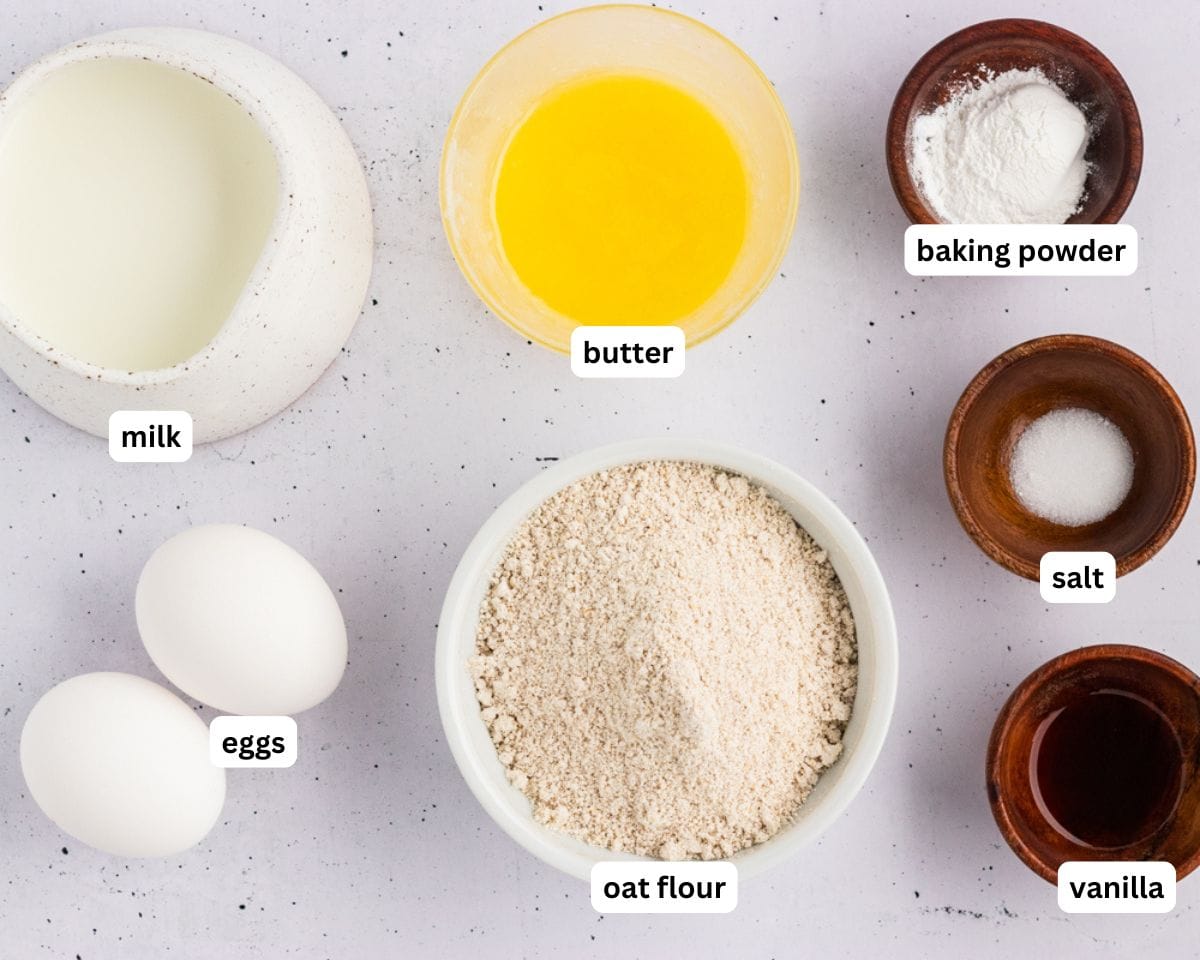
Gather the ingredients together.
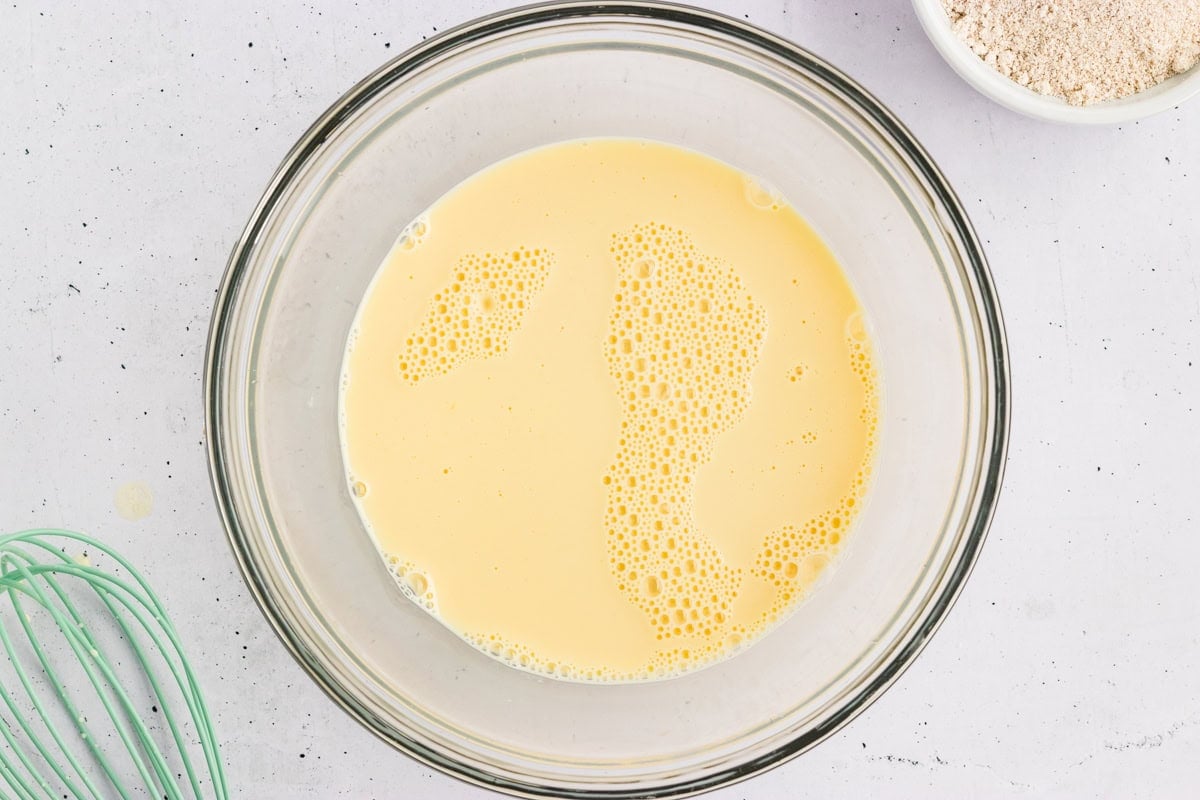
Whisk the wet ingredients: In a large bowl, whisk together 1 cup milk (241 ml), 2 eggs, and 1 tsp vanilla extract (4 ml) until fully combined.
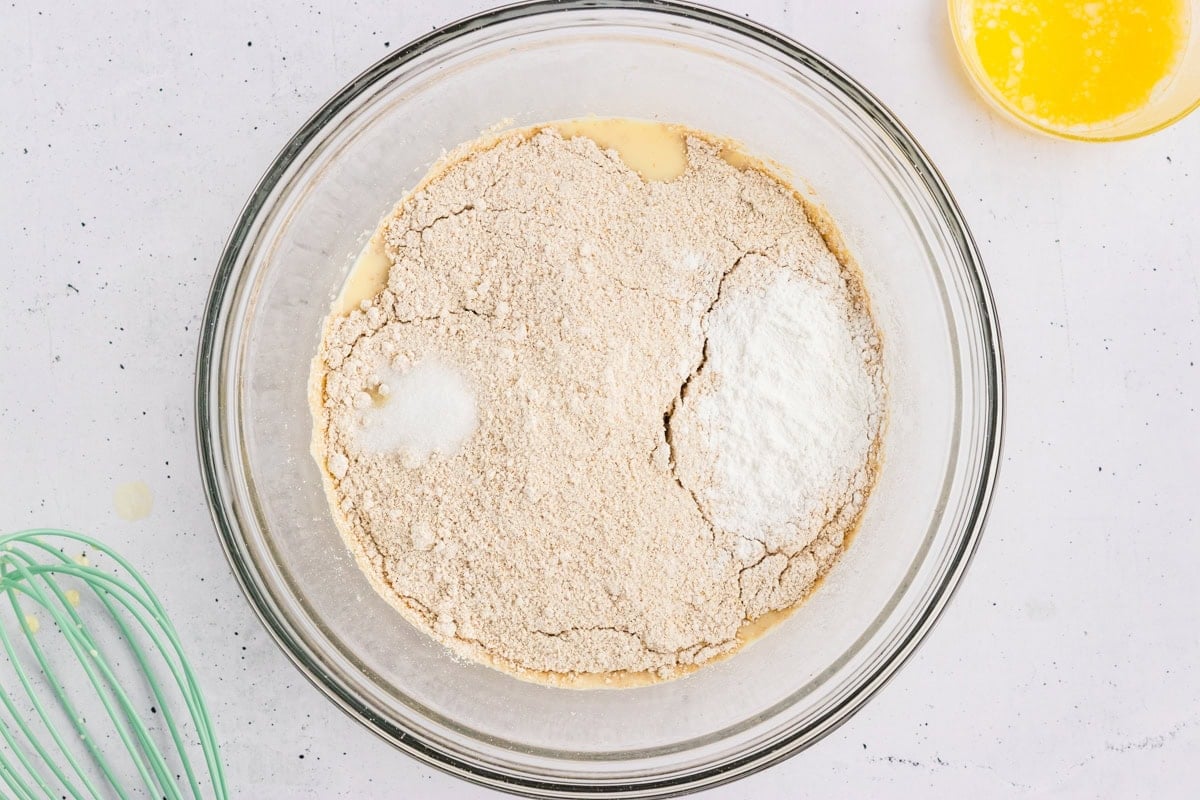
Add the dry ingredients: Add 1¾ cups oat flour (161g), 2 tsp baking powder (8g), and ½ tsp salt (3g) directly into the same bowl and mix until just combined. Don’t worry about overmixing here. Oat flour has no gluten to develop, which is exactly why we skip the extra bowl and dump everything in together.
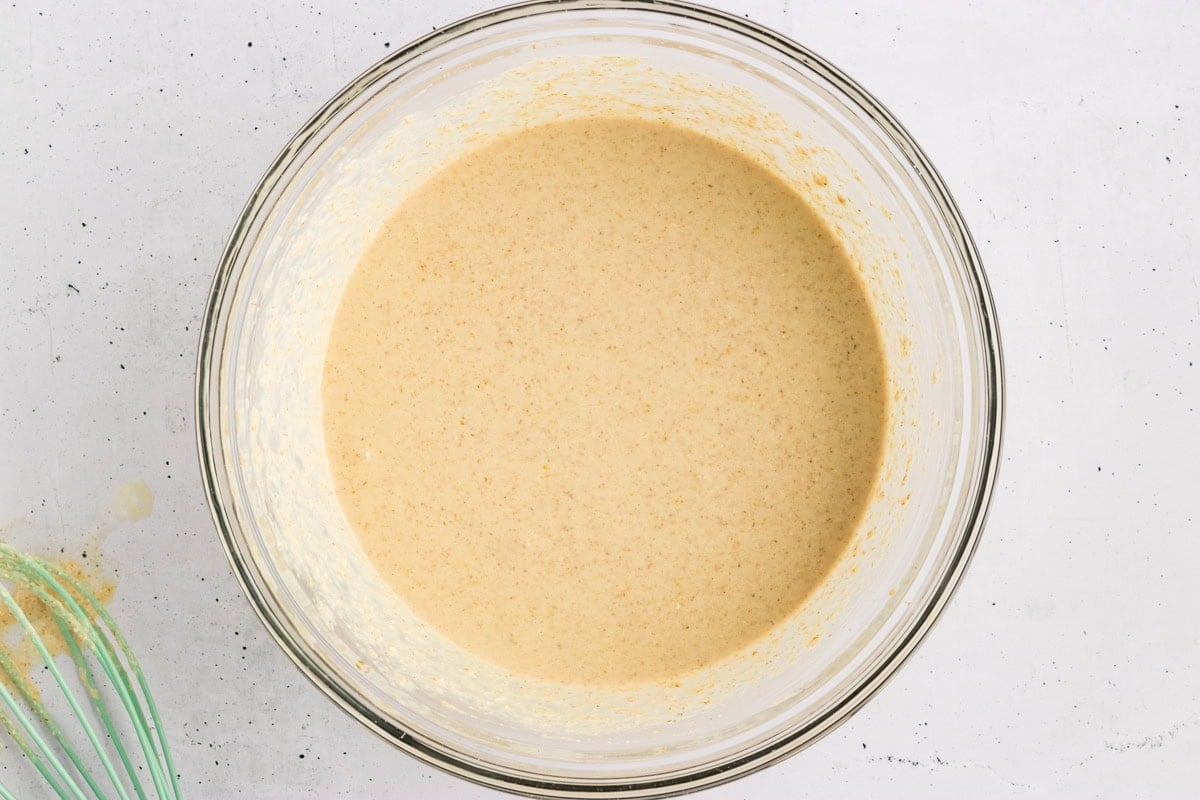
Fold in the butter: Once the batter is mostly mixed, pour in 2 tbsp melted butter (30 ml) and give everything one final stir until smooth. Cover the bowl and set it aside for 15 minutes. This gives the oat flour time to absorb the moisture, thickening the batter into something scoopable rather than pourable. This is what creates that soft, fluffy texture.
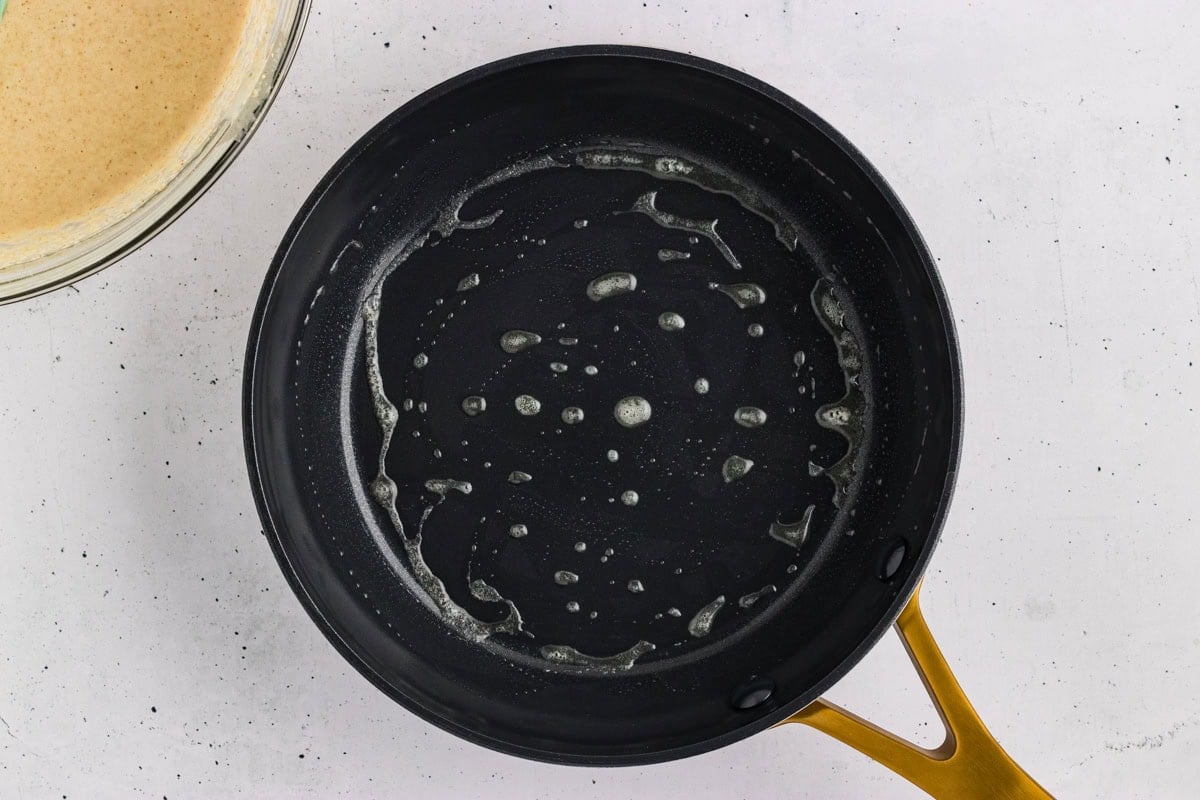
Preheat your pan: Once the batter has rested, heat a pan over medium-low heat and coat it with butter or a neutral oil.
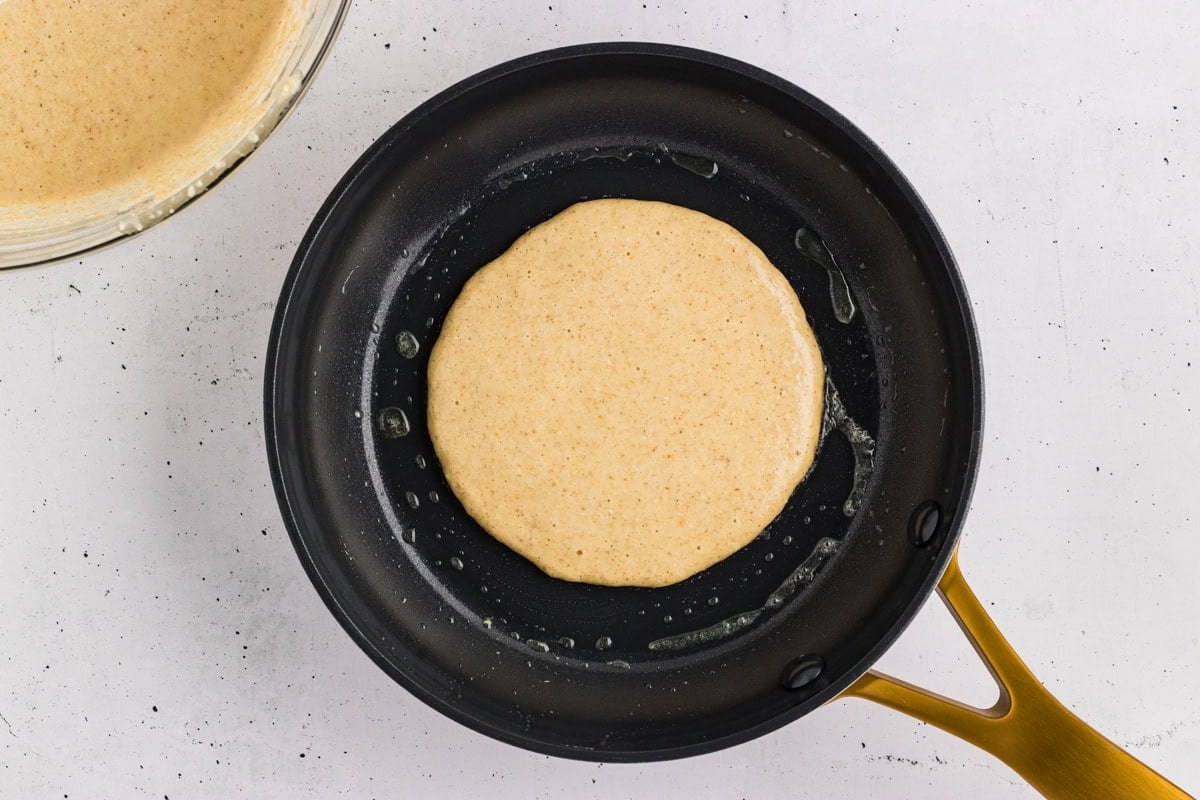
Cook the first side: Scoop your desired amount of batter onto the hot pan. Add any mix-ins, like chocolate chips or blueberries, right on top now. Cook until the bottom is golden brown, and bubbles start forming across the top, about 2-3 minutes.
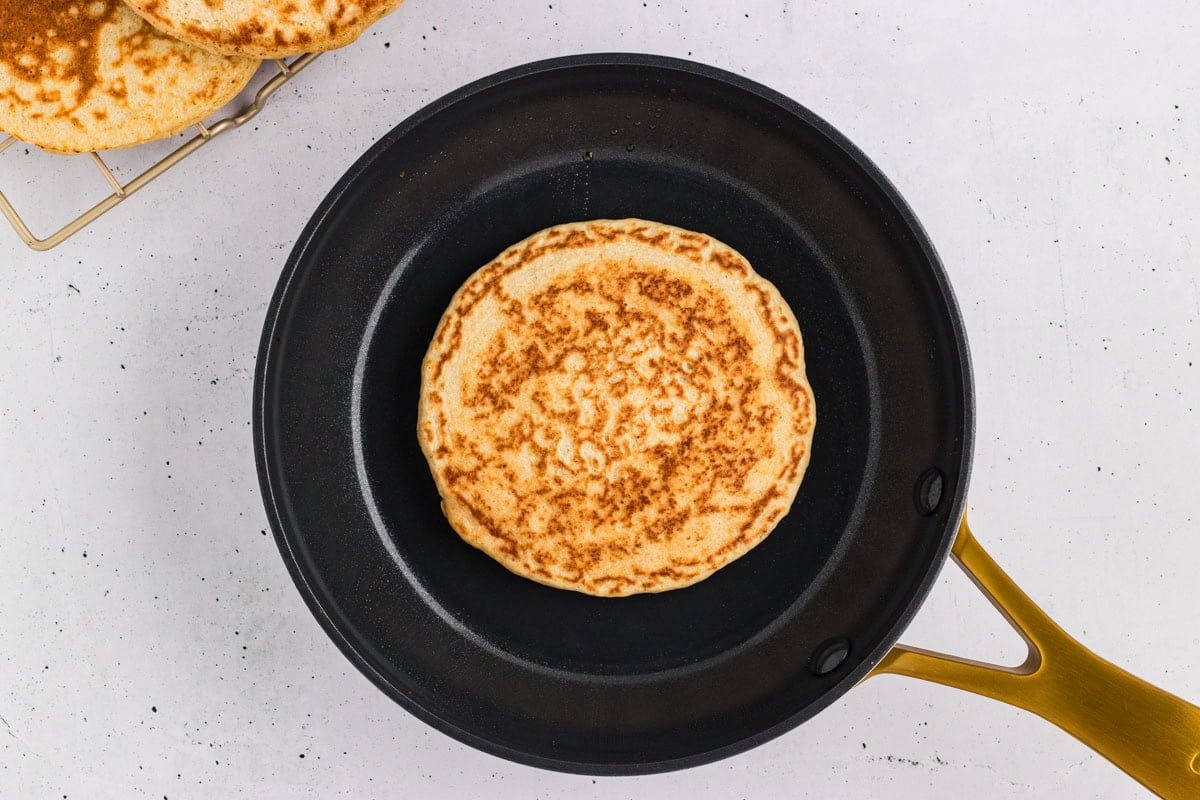
Flip and finish: Flip the pancake and cook until both sides are deep golden brown and the center springs back when touched.
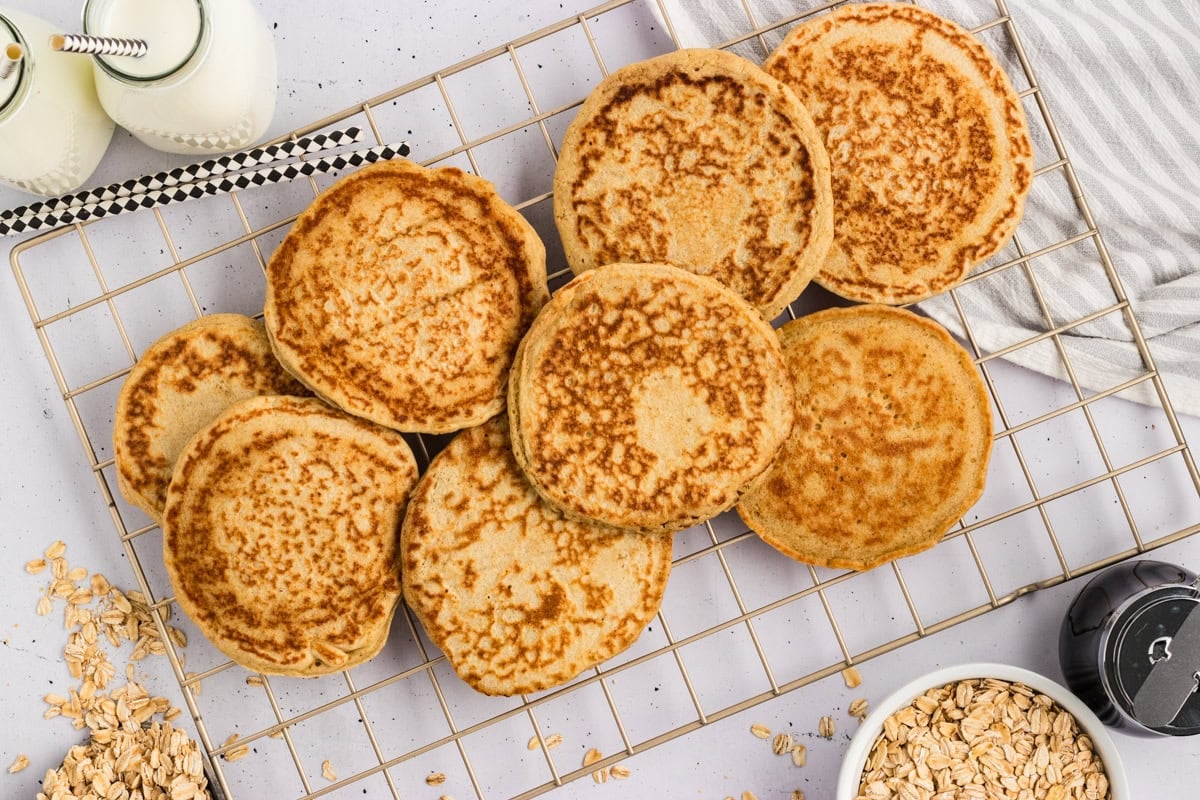
Cool and repeat: Move finished pancakes to a wire rack to cool slightly (this keeps the bottoms from getting soggy) while you cook through the rest of the batter.
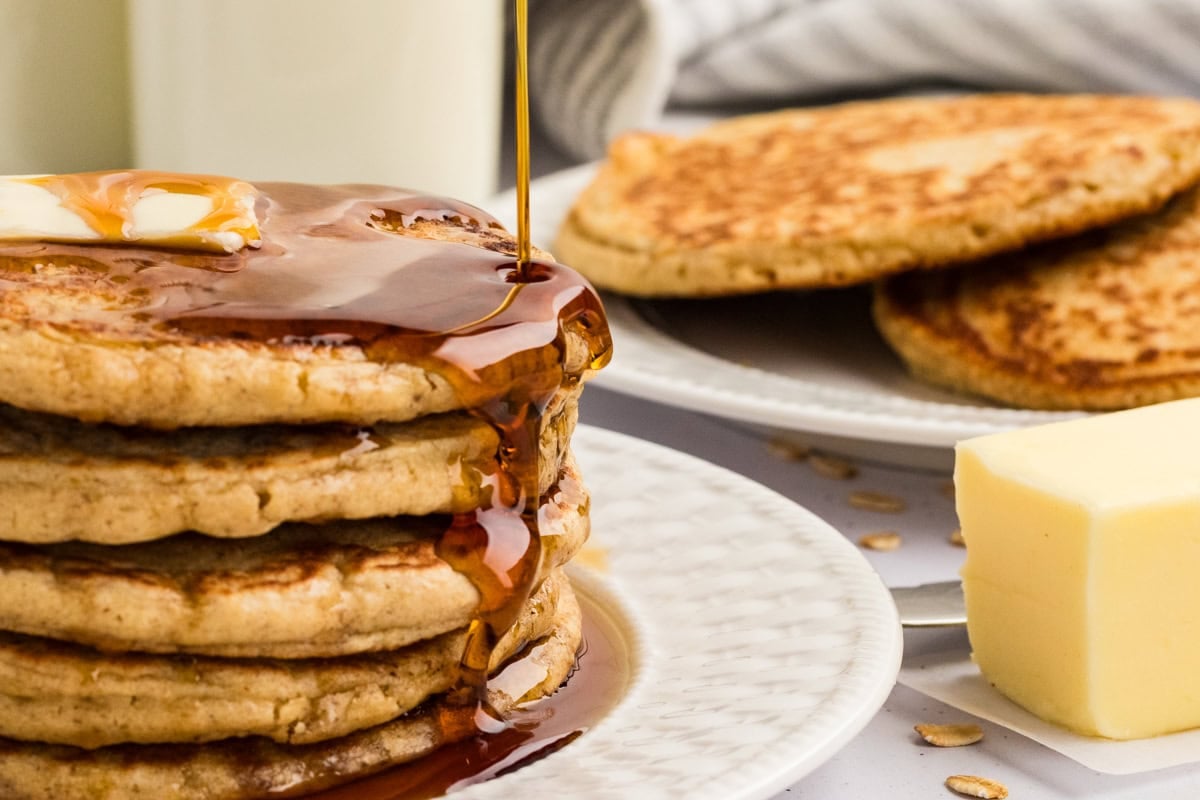
Variations & Toppings
- Mix-ins. Stir chocolate chips, fresh or frozen blueberries, or a spoonful of cinnamon straight into the batter once it’s rested, or sprinkle them onto each pancake right after you pour it into the pan. Chopped nuts and diced bananas work well the same way.
- Dairy-free. Swap the milk for your favorite unsweetened non-dairy milk and use a neutral oil or dairy-free butter in place of the melted butter. The texture stays just as soft.
- Vegan. Replace each egg with a flax egg (1 tablespoon ground flaxseed mixed with 2.5 tablespoons water, rested for 5 minutes) and use a non-dairy milk and dairy-free butter or oil. The batter will be slightly less rich, but it still rests and cooks up the same way.
- Toppings. Beyond maple syrup and butter, try a dollop of yogurt and fresh fruit, a smear of peanut or almond butter, or a dusting of powdered sugar for a simple weekend upgrade.
Serving Suggestions
The classic move is a warm drizzle of pure maple syrup and a pat of butter melting into the top; you really can’t go wrong starting there. If you want something savory on the plate, Gluten-Free Breakfast Casserole is loaded with sausage, eggs, and hash browns, so it fills out the rest of the meal without you having to cook a second thing. For a fruitier brunch spread, Gluten-Free Blueberry Lemon Breakfast Casserole brings the same bright, tangy contrast that fresh berries would, and it’s just as easy to make ahead. If you’d rather keep things light, Gluten-Free Crepes are a nice way to stretch the same batter-and-syrup breakfast into a second course for guests. And when you want to go all out for a holiday morning, Easy Gluten-Free Bagels round out a full spread with something you can prep the day before.
Storage Instructions
Let the pancakes cool completely, then seal them in an airtight container or bag. They’ll keep in the fridge for up to 7 days.
Freezer
Cool the pancakes fully, then flash-freeze them in a single layer on a baking tray until firm. Transfer them to a freezer bag, or stack them with a layer of parchment paper between each pancake. Either method keeps them from freezing into one solid block, so you can grab exactly what you need.
Reheating
Reheat straight from frozen or the fridge in the microwave in 20-30 second bursts, in a toaster for a crisper edge, or in a 350°F oven for about 8 minutes until warmed through.
Make Ahead
The batter is best cooked fresh once it’s rested, but you can whisk the wet and dry ingredients separately up to a day ahead and combine them (plus the resting time) right before you want to cook.
More Oat Flour Recipes We Love
- Oat Flour Waffles: Craving the same soft, oat-y flavor in a different shape? These waffles use the same one-bowl method and come together in about the same amount of time.
- Oat Flour Banana Bread: A great way to use up any extra oat flour you have on hand, with the same tender, cozy crumb these pancakes have.
- Oat Flour Bread: A yeast-free quick bread built on the same blended-oat base, perfect if you want to keep the oat flour recipes going all week.
- Oat Flour Chocolate Chip Cookies: If the mix-in habit from your pancakes carries over into dessert, these chewy cookies are built on the same gluten-free flour swap.







My husband and I enjoyed this nutty flavored recipe. The pancakes were delicious and will make again soon.